Home / Science / Japan's AI Reads Minds Through Eye Movements
Japan's AI Reads Minds Through Eye Movements
27 Nov
Summary
- New technology in Japan gauges psychological responses by analyzing eye movements.
- Researchers are developing AI to measure mental wellbeing without self-reporting.
- Data from eye tracking and body signals could offer personalized mental health support.
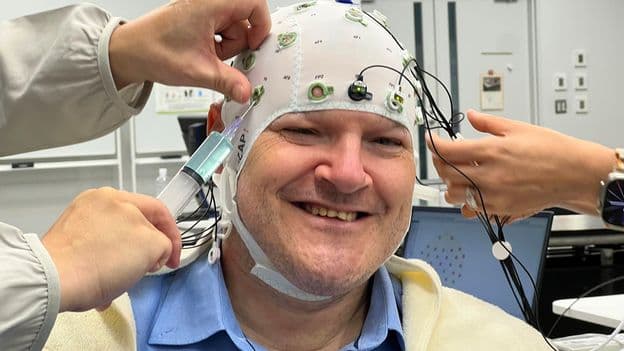
Researchers in Japan are developing advanced technology that analyzes eye movements to gauge psychological states, a departure from traditional self-reporting methods. The "Maemuki effect" project at QST in Chiba is utilizing machine learning and AI to identify patterns in brain activity, eye tracking, and even body signals. This aims to create objective measures of mental wellbeing.
The initiative seeks to understand traits associated with a "forward-facing mentality," particularly in difficult times, rather than just happiness. By combining data from the brain, body, and behavior, the project intends to build a comprehensive picture of an individual's response to challenges. This information could lead to personalized support, moving beyond current diagnostic-based interventions.
Early trials involve experiments like pupil tracking and gaze analysis, which have shown correlations with cognitive effort and performance. Advanced prototypes combine multiple signals, such as eye tracking, EEG, and heart rate, to predict a "Maemuki measure." This could eventually lead to technologies like the Body2Positive platform, offering support tailored to individual needs.


