Home / Science / Ancient Massacre: 2,800-Year-Old Brutal Killings Uncovered
Ancient Massacre: 2,800-Year-Old Brutal Killings Uncovered
23 Feb
Summary
- Mass grave in Serbia reveals 77 individuals, mostly women and children, bludgeoned.
- Injuries show intentional, violent trauma, suggesting attackers were not in face-to-face confrontation.
- Genetic analysis indicates victims were unrelated and from different areas, suggesting targeted killing.
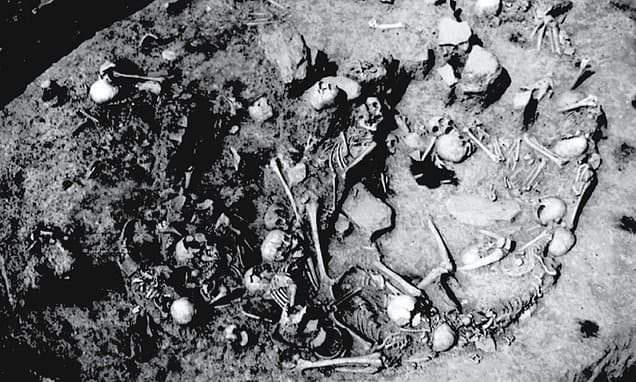
A mass grave in Gomolava, Serbia, has yielded shocking evidence of a brutal massacre that occurred approximately 2,800 years ago. Excavations revealed the remains of over 77 individuals, with a significant majority being women and children. Analysis of the skeletal remains indicates extensive, intentional, and often lethal trauma, primarily to the head.
The nature of the injuries suggests that the attackers were not engaged in direct confrontation, and some evidence points to perpetrators being on horseback. While some victims showed signs of defensive wounds, the overall pattern indicates a deliberate and efficient act of violence. Genetic analysis further revealed that the victims were largely unrelated and came from different areas, pointing towards a targeted killing rather than a random event.
This early instance of collective violence is believed to have occurred during a period of unrest and increasing settlement immobility. Researchers suggest the massacre was a calculated act, potentially part of a larger systemic conflict. The burial itself was carefully prepared, with individuals interred with personal items and the grave site adorned with ornaments, suggesting the profound significance of the event for the community.
The findings shed new light on targeted, gender and age-selective killings as a method of asserting dominance in prehistoric Europe. This episode of cross-regional conflict and an aggressive shift in power dynamics likely had a far-reaching impact on neighboring communities, serving as a stark reminder of the evolution of violent behavior.