Home / Science / Storms Reveal Rare 2,000-Year-Old Scottish Prints
Storms Reveal Rare 2,000-Year-Old Scottish Prints
19 Feb
Summary
- Two dog walkers found 2,000-year-old human and animal footprints.
- The ancient prints were revealed by recent storms in Scotland.
- Archaeologists raced against time to document the fragile site.
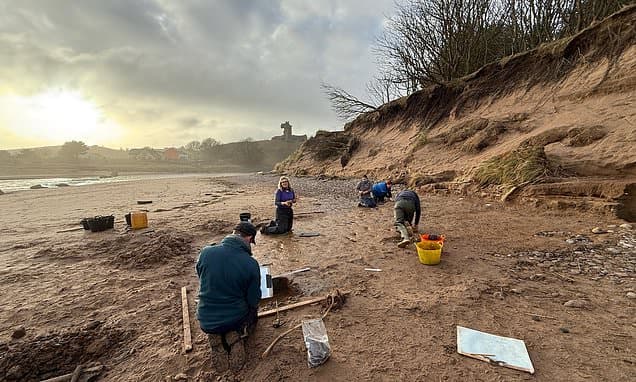
Recent storms in Scotland have unearthed a significant archaeological find at Lunan Bay, Angus. Dog walkers Ivor Campbell and Jenny Snedden discovered 2,000-year-old human and animal footprints preserved in clay.
Archaeologists from the University of Aberdeen were called to the scene and faced challenging conditions, including high winds and incoming tides, to record the rare site. Similar discoveries are known in England, but this is a first for Scotland.
The team worked rapidly to capture data, including 3D models and casts, before the sea destroyed the fragile prints within 48 hours. Radiocarbon dating of plant remains confirmed the footprints were made around the time of the Roman Empire.
Analysis identified prints of roe deer, red deer, and barefoot humans, offering insights into their environment and activities. The discovery provides a unique snapshot of late Iron Age life in Scotland, potentially from the period of Roman invasions.