Home / Science / 1066 March Myth: Hastings History Rewritten
1066 March Myth: Hastings History Rewritten
21 Mar
Summary
- King Harold's famed 200-mile march to Hastings is now considered a myth.
- Researchers suggest Harold's journey was primarily by sea, not foot.
- Victorian historians misinterpreted Anglo-Saxon records about Harold's fleet.
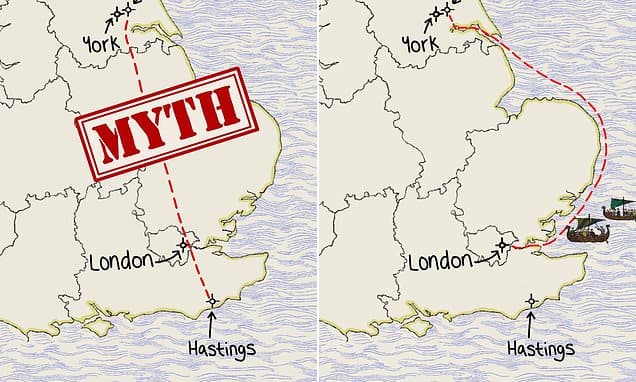
The historical narrative of King Harold's 200-mile march to the Battle of Hastings in 1066 has been challenged by new findings from the University of East Anglia. Researchers re-examined the Anglo-Saxon Chronicle, one of the earliest records of English history, to debunk the myth of a desperate land march.
Instead, the study posits that Harold's campaign was a sophisticated land-sea operation. The Chronicle's mention of the fleet 'coming home' was misinterpreted by Victorian historians to mean it was dismissed. Experts now believe the ships returned to their base in London and remained operational.
This reinterpretation suggests Harold strategically used his fleet to defend the south coast and support his campaign against Harald Hardrada. His naval assets were then employed to face Duke William of Normandy after the Battle of Stamford Bridge, reframing Harold as a strategist, not an exhausted commander.