Home / Lifestyle / From Lace to Pizza: Valentine's Cards' Witty Evolution
From Lace to Pizza: Valentine's Cards' Witty Evolution
13 Feb
Summary
- Valentine's cards evolved from ornate Victorian designs to modern, witty messages.
- Early traditions involved lottery-like name-drawing for Valentines until Easter.
- Esther Howland pioneered American Valentine's card production in the mid-1800s.
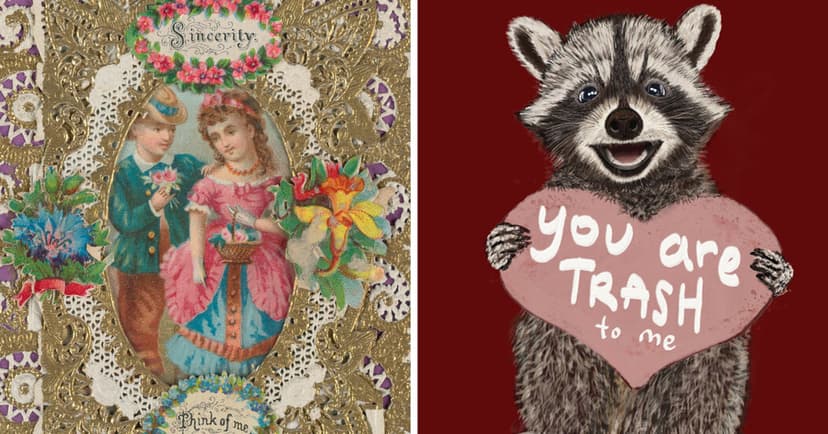
Valentine's Day cards have undergone a remarkable transformation over two centuries, mirroring shifts in cultural norms and aesthetics. Initially, elaborate Victorian cards featuring lace and coy imagery conveyed messages of desire within a restrictive society. These cards offered women a unique, albeit anonymous, opportunity for bold romantic expression. This tradition arrived in the United States around the mid-1800s, largely commercialized by entrepreneurial figures like Esther Howland, who established an assembly line for handmade cards.
Early customs, dating back to the 17th century, were far less romantic, involving a lottery where individuals were assigned Valentines until Easter. The late 1700s and early 1800s saw a rise in the idealization of marrying for love, coinciding with printing advancements and expanded postal services, further solidifying the card's role in courtship.
In the 20th century, Hallmark became a dominant force, initially using traditional symbols but later adapting to consumer tastes with more contemporary imagery. Significant inclusivity milestones were reached in the 2000s, with cards for Black couples appearing in 1970 and for same-sex relationships in 2008.
More recently, the mid-2000s marked a shift towards candid, humorous, and sometimes self-deprecating messages, exemplified by Emily McDowell's popular designs. This trend continues today, with independent designers catering to a demand for authentic, plain-speaking cards that acknowledge intimate relationships and everyday life, moving away from purely saccharine sentiments.