


Home / Lifestyle / India's Kitchens Unite: A Feast of New Year Traditions
India's Kitchens Unite: A Feast of New Year Traditions
14 Apr
Summary
- Multiple New Years celebrated simultaneously across India on April 14-15.
- Festivals like Baisakhi, Poila Boishakh, Rongali Bihu, and Vishu share common roots.
- Food traditions central to marking renewal and abundance in these celebrations.
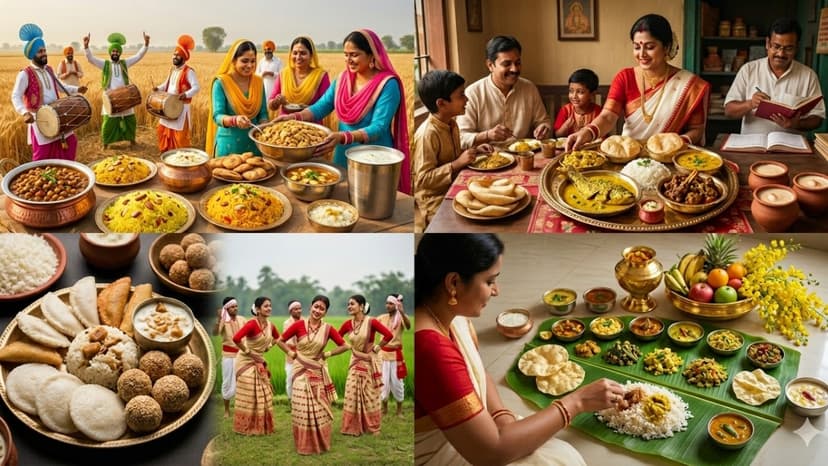
From Punjab to Kerala, India collectively celebrates New Year on April 14-15 with diverse festivals like Baisakhi, Poila Boishakh, Rongali Bihu, and Vishu. These celebrations, rooted in the solar calendar and harvest cycles, signify renewal and abundance.
In Punjab, Baisakhi is both a harvest festival and historically significant, while Assam's Rongali Bihu heralds the agricultural cycle with music and dance. Bengal's Poila Boishakh emphasizes new beginnings in trade and community, marked by sweet traditions.
Kerala's Vishu begins with the visual abundance of the Vishukkani before the meal. These traditions, from harvest to commerce and spirituality, converge on the belief in starting the year with fullness.
Culinary offerings vary: Punjab features hearty dishes like meethe chawal and chole, Bengal boasts indulgent meals such as shukto and shorshe ilish, Assam offers intimate, handmade foods like pitha and laru, and Kerala presents the comprehensive sadya.
Despite urban adaptations and fusion menus, the essence of communal gathering, cooking, and eating together persists, holding onto tradition while adapting to modern constraints.
