Home / Lifestyle / Holi: India's Festival of Colors Ignites Joy
Holi: India's Festival of Colors Ignites Joy
3 Mar
Summary
- Holi celebrates the arrival of spring with vibrant colors and joy.
- The festival has deep religious and cultural roots, symbolizing rebirth.
- Celebrations involve throwing colored powders, music, dancing, and special foods.
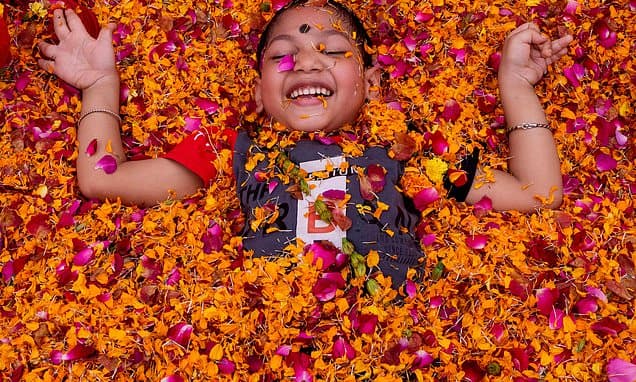
Holi, the Hindu festival of colors, joyfully welcomes the advent of spring and signifies a time of rebirth and rejuvenation. Celebrated typically in March, it carries profound cultural and religious importance across India, Nepal, and diaspora communities.
The festival's most iconic tradition sees participants, often dressed in white, joyfully dousing each other with vibrant colored powders, transforming streets into a lively spectacle of pigments and happiness. These colorful festivities are accompanied by music, dancing, and shared meals.
Historically, Holi is observed on the last full moon day of the Hindu luni-solar month of Falgun, usually falling in March. This year, it will be celebrated on March 4, 2026. A significant prelude in many parts of India involves lighting large bonfires the night before, symbolizing the vanquishing of evil and the ascendancy of good.
Mythological narratives underpinning Holi include the tale of King Hiranyakashipu, his son Prahlad, and the immune sister Holika, who perished in a pyre meant to destroy the boy. Another tradition in southern India, Kama Dahanam, commemorates Lord Shiva's incineration of Kamadeva, the god of love, signifying detachment from worldly desires for spiritual growth.
The colors themselves hold symbolic meaning: blue represents Lord Krishna, green signifies spring and rebirth, red denotes marriage or fertility, and red and yellow together represent auspiciousness. Culinary delights are central to Holi, with popular treats including 'gujia,' a sweet fried pastry, and 'thandai,' a refreshing milk-based drink.
In North America and other regions with Hindu populations, Holi is celebrated through Bollywood-themed parties, parades, and community gatherings. Some U.S. temples observed Holika Dahan on February 2 or 3, 2026, coinciding with a full moon and a rare lunar eclipse.