

Home / Lifestyle / Dhoti vs. Veshti: Unraveling India's Fabric Heritage
Dhoti vs. Veshti: Unraveling India's Fabric Heritage
24 Apr
Summary
- Dhoti is North/East/West India; Veshti is strictly South Indian.
- Dhoti uses bifurcated sakaccha style, resembling trousers.
- Veshti uses vikaccha style, wrapped like a sarong.
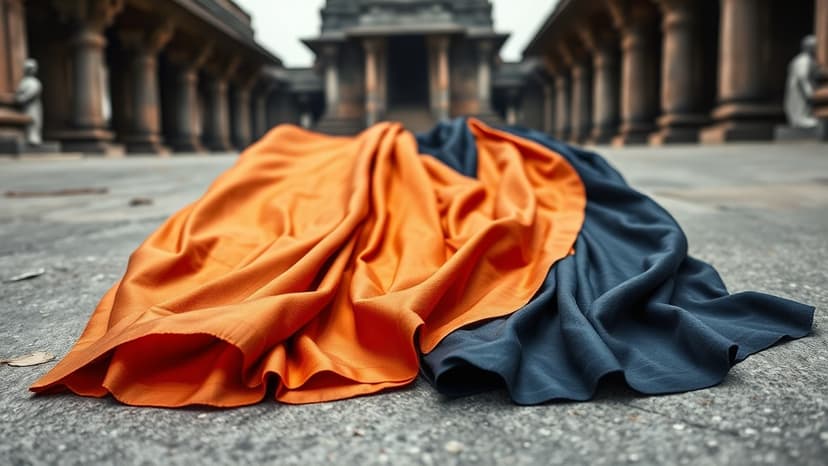
The dhoti and veshti, often mistakenly used interchangeably, represent centuries of distinct regional history in Indian menswear. Understanding their differences respects the heritage of these garments.
The dhoti, prevalent in North, East, and West India, evolved from the ancient antariya. Its unique sakaccha drape involves pulling the fabric between the legs and tucking it in the back, creating a practical, trouser-like silhouette. This design allows for unrestricted movement, historically favored by farmers and soldiers.
Conversely, the veshti is a distinctly South Indian garment, with origins traceable to ancient Tamil Sangam literature. It is draped using the vikaccha style, wrapped around the waist and falling to the ankles like a sarong. The fabric does not pass between the legs, offering a breezy and elegant alternative.
Fabrication and embellishments also distinguish the two. Dhotis typically require 3.7 to 4.5 meters of fabric, often featuring ornate borders from weaving hubs like Banarasi. Veshtis, usually around 2 meters for a single piece (Otte), emphasize border designs. Everyday veshtis display striped borders, while ceremonial ones like the venpattu can feature gold or copper zari borders, reflecting South Indian luxury weaving traditions.
While traditional rules exist, draping styles can vary with rituals and communities. South Indian Brahmins, for instance, use the Panchagachham style for ceremonies, which mimics the dhoti's shape and mobility. Ultimately, both dhoti and veshti stand as masterful, distinct approaches to unstitched garment design in India.
