feedzop-word-mark-logo
searchLogin
Feedzop
homeFor YouIndiaIndia
You
bookmarksYour BookmarkshashtagYour Topics
Trending
Terms of UsePrivacy PolicyAboutJobsPartner With Us

© 2026 Advergame Technologies Pvt. Ltd. ("ATPL"). Gamezop ® & Quizzop ® are registered trademarks of ATPL.

Gamezop is a plug-and-play gaming platform that any app or website can integrate to bring casual gaming for its users. Gamezop also operates Quizzop, a quizzing platform, that digital products can add as a trivia section.

Over 5,000 products from more than 70 countries have integrated Gamezop and Quizzop. These include Amazon, Samsung Internet, Snap, Tata Play, AccuWeather, Paytm, Gulf News, and Branch.

Games and trivia increase user engagement significantly within all kinds of apps and websites, besides opening a new stream of advertising revenue. Gamezop and Quizzop take 30 minutes to integrate and can be used for free: both by the products integrating them and end users

Increase ad revenue and engagement on your app / website with games, quizzes, astrology, and cricket content. Visit: business.gamezop.com

Property Code: 5571

Home / Lifestyle / Delhi: India's Ancient Street Food Capital

Delhi: India's Ancient Street Food Capital

25 Jan

•

Summary

  • Delhi's street food evolved with empires and traders.
  • Merchants invented popular street foods like aloo tikki.
  • Partition refugees significantly influenced Delhi's cuisine.
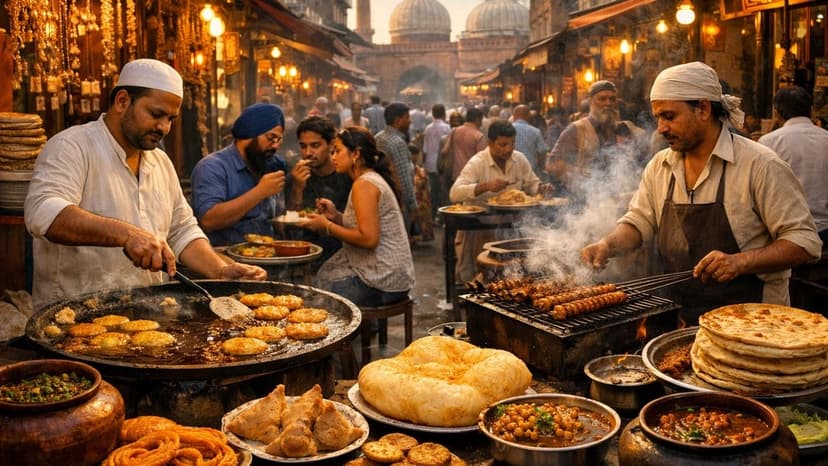
Delhi: India's Ancient Street Food Capital

Delhi's journey to becoming India's Street Food Capital is a narrative woven through its history, from the rise and fall of empires to the daily lives of its inhabitants. The city's street food scene developed alongside its bustling markets and evolving demographics.

The origins of popular street foods, such as aloo tikki, can be traced back to merchants in Old Delhi who sought to offer quick snacks to shoppers. The lanes of Shahjahanabad, the old Mughal capital, were already known for dishes like kebabs and stews designed for on-the-go consumption.

Further culinary evolution occurred when British workers brought diverse recipes during the construction of New Delhi. Following the Partition, Punjabi refugees introduced rich, butter-based gravies and tandoori snacks, many of which are now city staples.

trending

Suzlon Energy Q3 results up

trending

realme P4 Power 5G launched

trending

Australia vs Netherlands warm-up

trending

CTET admit card releasing soon

trending

Kaleem stars, Oman beats Sri Lanka

trending

Nepal vs Canada warm-up

trending

DSSSB PRT admit card 2026

trending

Mrunal Thakur wedding rumours

trending

Savannah Guthrie pleads for mother

This historical depth, spanning royal kitchens to roadside stalls and incorporating influences from various communities, is why Delhi is celebrated as the Street Food Capital of India. The city's vibrant street food culture is not a niche interest but a primary aspect of daily life, feeding millions across all social strata.

Disclaimer: This story has been auto-aggregated and auto-summarised by a computer program. This story has not been edited or created by the Feedzop team.
Delhi became the Street Food Capital due to its long history, evolving with empires and traders, and later influenced by refugees and diverse populations.
The city's street food evolved with the rise and fall of empires, the movement of traders, the construction of New Delhi, and the influx of Punjabi refugees after Partition.
Popular street foods like aloo tikki were invented through experimentation by merchants in Old Delhi when streets were crowded with buyers.

Read more news on

Lifestyleside-arrow

You may also like

Delhi Rains Improve Air Quality, More Wet Weather Expected

2 Feb • 23 reads

article image

Delhi Chokes: Air Quality Remains Critically Poor

23 Dec, 2025 • 258 reads

article image

Delhi Swelters: December Chill Vanishes Amidst Warm Days

17 Dec, 2025 • 294 reads

article image

Delhi Smog Crisis Robs Elderly of Winter Freedoms

17 Nov, 2025 • 381 reads

article image

Delhi's Air Quality Plummets, Raising Concerns Over Underreporting

31 Oct, 2025 • 309 reads

article image