Home / Health / Men's Y Chromosome Loss Linked to Shorter Lifespans
Men's Y Chromosome Loss Linked to Shorter Lifespans
15 Feb
Summary
- Y chromosome loss increases with age, affecting over 50% of elderly men.
- This genetic change is linked to serious diseases like cancer and heart issues.
- Loss of Y chromosome may contribute to a shorter lifespan in men.
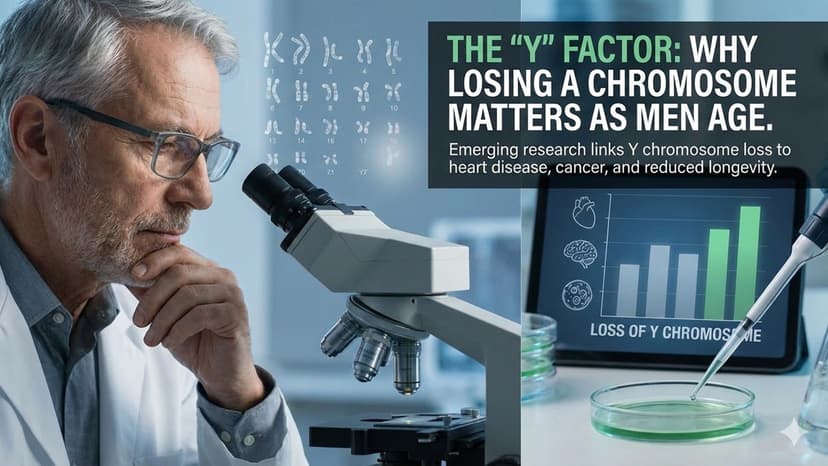
As men age, a notable percentage of their cells lose the Y chromosome, a genetic shift linked to increased health risks. This phenomenon, observed more frequently in older individuals, with over 50% of nonagenarians affected, is associated with a spectrum of serious diseases. Conditions such as cardiovascular and neurodegenerative disorders, and various cancers, have shown correlations with Y chromosome loss.
This genetic anomaly is not without consequence, as it is increasingly implicated in contributing to a shorter lifespan for affected men. While the Y chromosome carries few genes, its absence in body cells suggests a role in maintaining health that is only now being fully understood. Researchers are investigating how this loss might directly impact cellular function and disease progression.
Studies indicate that Y chromosome loss can be influenced by environmental factors like smoking. The resulting mosaic of cells, some lacking the Y chromosome, may have a growth advantage, potentially playing a role in tumor development. Further research aims to unravel the specific mechanisms by which Y chromosome genes protect against disease.