Home / Health / Wealth Trumps Caste, Religion for Indian Survival
Wealth Trumps Caste, Religion for Indian Survival
25 Nov
Summary
- Household wealth significantly impacts adult survival more than caste or religion.
- Men from richest households have 62% lower death risk than poorest.
- Women's mortality declined faster than men's over two decades.
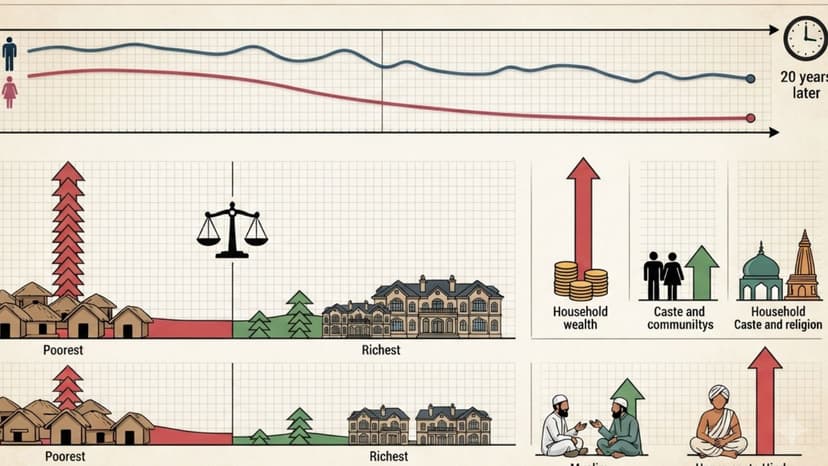
A comprehensive study tracking adult mortality in India over twenty years indicates that household wealth is a more significant predictor of survival between ages 15 and 59 than caste or religion. The research, published in Demographic Research, analyzed data from three rounds of the National Family Health Survey (NFHS).
Men from India's richest households have a 62% lower risk of death during their working years compared to men from the poorest households. For women, this survival advantage for the wealthy is 42%. Scheduled Caste women consistently face a higher risk of adult death than upper-caste Hindu women, even after adjustments for wealth and geography.
Muslim men demonstrated a consistently lower risk of adult death than upper-caste Hindu men across all survey periods. Factors like lower alcohol consumption and higher urbanization among Muslim populations are suggested as potential reasons. Conversely, Muslim women did not exhibit the same mortality advantage.
Over the two decades studied, mortality rates have declined more rapidly among women than men. However, male adult mortality saw an increase between 2015-16 and 2019-21, potentially linked to the Covid-19 pandemic and occupational risks. The study emphasizes that improving economic stability and reducing poverty are crucial for enhancing adult survival rates across all social groups.


