feedzop-word-mark-logo
searchLogin
Feedzop
homeFor YouIndiaIndia
You
bookmarksYour BookmarkshashtagYour Topics
Trending
trending

Gold prices hit record highs

trending

Adani's Ambuja merges ACC, Orient

trending

ITR penalty cancelled by ITAT

trending

bp surveys Azerbaijan's Karabagh

trending

Galaxy S26 Ultra: delayed release

trending

Raúl Jiménez lifts Fulham

trending

Srinagar records 4 degrees Celsius

trending

David Neres scores twice

trending

Inter lose Supercoppa semi-final

Terms of UsePrivacy PolicyAboutJobsPartner With Us

© 2025 Advergame Technologies Pvt. Ltd. ("ATPL"). Gamezop ® & Quizzop ® are registered trademarks of ATPL.

Gamezop is a plug-and-play gaming platform that any app or website can integrate to bring casual gaming for its users. Gamezop also operates Quizzop, a quizzing platform, that digital products can add as a trivia section.

Over 5,000 products from more than 70 countries have integrated Gamezop and Quizzop. These include Amazon, Samsung Internet, Snap, Tata Play, AccuWeather, Paytm, Gulf News, and Branch.

Games and trivia increase user engagement significantly within all kinds of apps and websites, besides opening a new stream of advertising revenue. Gamezop and Quizzop take 30 minutes to integrate and can be used for free: both by the products integrating them and end users

Increase ad revenue and engagement on your app / website with games, quizzes, astrology, and cricket content. Visit: business.gamezop.com

Property Code: 5571

Home / Health / Tanning Beds Harm DNA, Raise Melanoma Risk 3x

Tanning Beds Harm DNA, Raise Melanoma Risk 3x

23 Dec

•

Summary

  • Indoor tanning triples the risk of developing melanoma.
  • Tanning beds cause DNA damage across nearly all skin.
  • More indoor tanning equals a higher melanoma risk.
Tanning Beds Harm DNA, Raise Melanoma Risk 3x

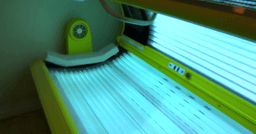
Indoor tanning is linked to a three-times greater risk of developing melanoma, the deadliest form of skin cancer, according to a recent study published in Science Advances. Researchers found that UV radiation from tanning beds not only increases mutation burden in skin cells but also directly alters DNA across nearly all skin surfaces. This damage is often most prominent on body parts that typically receive less natural sun exposure.

The study compared nearly 3,000 indoor tanning users with a control group, revealing that 5.1 percent of tanners developed melanoma versus 2.1 percent of non-tanners. A concerning "dose-dependent relationship" was observed, indicating that the more individuals used tanning beds, the higher their likelihood of developing melanoma. Experts note that these long-term consequences can lead to frequent medical procedures and the anxiety of a cancer diagnosis later in life.

Experts strongly advise against using tanning beds due to the significant DNA damage and increased cancer risk. They emphasize that the UV radiation doses and wavelengths emitted by tanning beds are often more intense than natural sunlight. For those seeking a tanned appearance, dermatologists recommend safe self-tanning products as a viable alternative.

Disclaimer: This story has been auto-aggregated and auto-summarised by a computer program. This story has not been edited or created by the Feedzop team.
The study published in Science Advances found that indoor tanning is linked to a three-times greater risk of developing melanoma.
Yes, researchers discovered that UV radiation from tanning beds can alter your DNA, laying the foundation for future skin cancer development.
Dermatologists recommend using safe self-tanner products to achieve a tanned look without the risks associated with tanning beds.

Read more news on

Healthside-arrow

You may also like

EPA Chief Lee Zeldin Reveals Skin Cancer Battle

15 Dec • 16 reads

article image

Gen Z's Tan Obsession: A Cancerous Choice?

14 Dec • 30 reads

article image

Tanning Beds Triple Melanoma Risk, DNA Damage Found

14 Dec • 62 reads

article image

Roche Drug Slashes Breast Cancer Recurrence by 30%

10 Dec • 118 reads

article image

Gray Hair: Is It Inevitable or Reversible?

11 Dec • 50 reads

article image