Home / Health / Scotland's Lifeline: Defibrillator Delays Plague Deprived Areas
Scotland's Lifeline: Defibrillator Delays Plague Deprived Areas
4 Feb
Summary
- Retrieval times for defibrillators exceed 17 minutes in some deprived Scottish areas.
- An additional 1,500 defibrillators could increase Scotland's coverage by 50%.
- CPR training is not mandatory in Scottish schools, leaving youth unprepared.
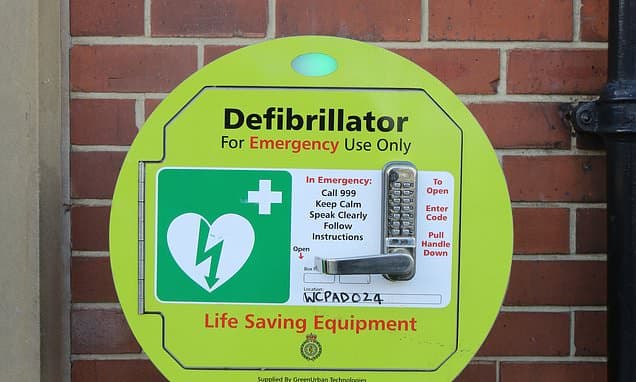
A report by the British Heart Foundation (BHF) reveals significant delays in accessing life-saving defibrillators in Scotland's deprived regions. In areas like Saltcoats, North Ayrshire, retrieval times for public access defibrillators (PADs) can exceed 17 minutes, while Barlanark in Glasgow sees waits over 14 minutes, and Charleston in Dundee around 12 minutes. These delays are particularly concerning as cardiac arrests are more prevalent in these same areas.
The BHF emphasizes that installing an additional 1,500 PADs across Scotland could enhance coverage by 50%, potentially saving numerous lives. The report, titled "Scotland - Bridging the Survival Divide: Strategically Improving OHCA Outcomes," urges the Scottish Government to optimize PAD distribution to increase survival rates for out-of-hospital cardiac arrests (OHCAs), of which there are 3,800 annually with a low survival rate of one in ten.
David McColgan, head of BHF Scotland, stated that Scotland now possesses the data to address the inequity in defibrillator access. He stressed the importance of strategic investment in PADs, especially in underserved communities, to ensure they are emergency-ready. The report also identifies a gap in preparedness, noting that CPR training is not a mandatory part of the school curriculum, leaving young individuals unprepared to provide immediate aid.
Personal accounts highlight the critical role of timely defibrillator use. Eleanor Hulme of Gifford Community Council shared an instance where a registered defibrillator was instrumental in saving a cyclist's life when ambulance response times exceeded 20 minutes in a semi-rural area. Milo Moss, whose life was saved by passers-by administering CPR after an OHCA in Edinburgh in 2020, also stressed the vital importance of accessible public defibrillators and public knowledge of CPR.