Home / Health / Haryana Cancer Facility Idle for 3 Years
Haryana Cancer Facility Idle for 3 Years
1 Mar
Summary
- A Rs 100 crore cancer facility in Rohtak remains unused for three years.
- Critical medical equipment procurement and government financial approvals are pending.
- Patients travel to Delhi and Gurugram for treatment due to the delay.
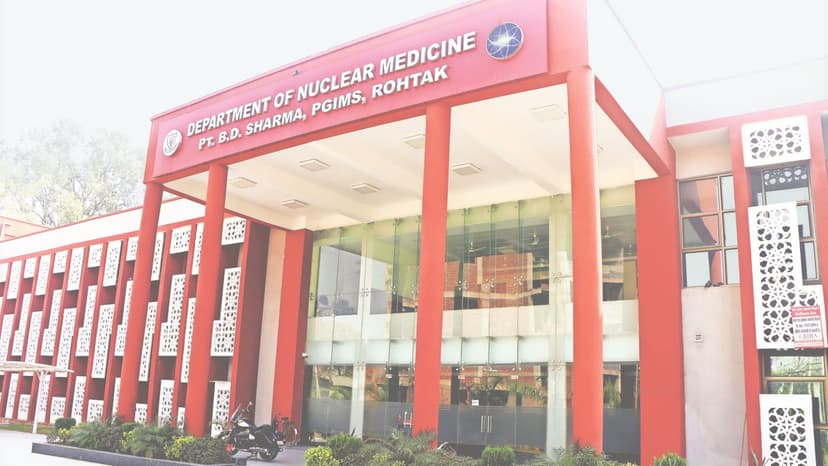
A critical cancer diagnostics and radiotherapy facility at Pandit Bhagwat Dayal Sharma Post Graduate Institute of Medical Sciences (PGIMS) in Rohtak has remained non-functional for three years. Despite the completion of its infrastructure, the lack of crucial medical equipment and pending government financial approvals have stalled its operationalization. Over Rs 100 crore has been spent on the project, which was intended to offer advanced services like PET scans and radiotherapy.
The project, which began construction in June 2021, requires an additional Rs 36.81 crore for full operationalization, including costs for a LINAC machine and a CT simulator. Currently, no major equipment has been procured, and no funds have been released for their purchase. This has forced patients from Rohtak and nearby districts to travel to private hospitals in Delhi and Gurugram, incurring substantial costs and facing treatment delays.
Haryana Health Minister Arti Rao stated that the LINAC machine and CT simulator are under procurement through CSR funds, and other equipment procurement is in process. However, PGIMS Director Suresh Kumar Singhal estimates that funds might be released in the first half of 2026. Local MP Deepender Singh Hooda criticized the prolonged delay, highlighting the unused public infrastructure.
Official sources indicate that operationalizing these facilities at PGIMS would offer affordable, timely, and accessible cancer treatment, particularly benefiting economically weaker sections. The new block has been partially used for cancer OPD services, and once fully equipped, it will provide comprehensive treatment for various malignancies, substantially benefiting women and rural patients.