Home / Health / Nigeria's Colorectal Cancer Crisis: A Growing Threat
Nigeria's Colorectal Cancer Crisis: A Growing Threat
4 Sep
Summary
- Colorectal cancer survival rates are significantly lower in Nigeria compared to Western nations.
- Lifestyle changes and delayed treatment contribute to a surge in advanced cancer cases.
- Collaborative research efforts aim to improve early detection and treatment in Africa.
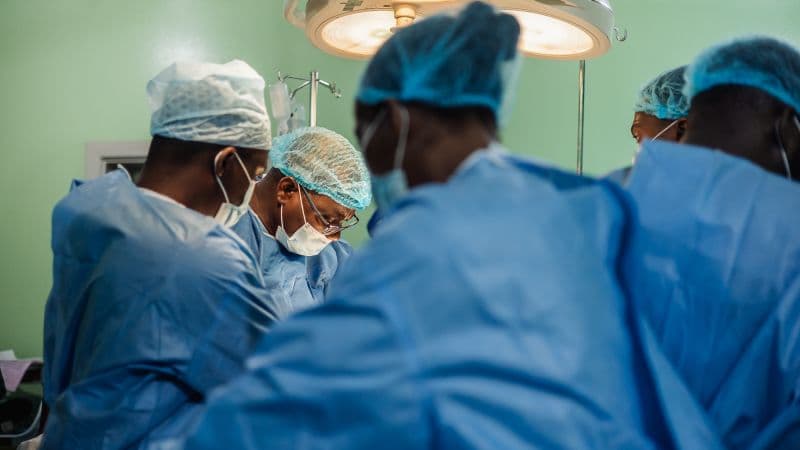
Colorectal cancer incidence is increasing exponentially in sub-Saharan Africa, presenting a stark contrast to previous assumptions of its rarity. Survival rates in Nigeria, approximately 1 in 5, are significantly lower than the 2 in 3 seen in the US or Western Europe. This disparity is largely attributed to patients seeking treatment at later stages of the disease, often after neglecting symptoms like rectal bleeding for extended periods.
Dr. Olusegun Alatise, a Nigerian surgeon, observed this trend firsthand, prompting him to collaborate with international partners. In 2013, he co-founded the African Research Group for Oncology (ARGO) to improve cancer research and training across Africa. ARGO's efforts focus on clinically meaningful research and developing accessible screening methods, such as a potential urine-based test for early detection.
Shifting dietary habits, with a move towards processed foods and away from traditional high-fiber diets, are identified as a major driver of the global increase in colorectal cancer. ARGO has piloted early detection programs, finding that nearly 20% of patients with rectal bleeding had colorectal cancer, with a significant portion caught at a curable stage.
Despite cultural taboos and financial barriers that prevent many Nigerians from seeking timely medical attention, initiatives like ARGO's awareness campaigns and provider training are showing promise. These efforts aim to improve symptom recognition and expedite referrals for screening, ultimately working to save lives and improve outcomes for patients in Nigeria and beyond.


