Home / Health / Male Endometriosis: A Biological Anomaly Revealed
Male Endometriosis: A Biological Anomaly Revealed
7 Mar
Summary
- Endometriosis, typically affecting women, has been documented in biological males.
- Rare cases involve endometrial-like tissue growing outside the uterus.
- Hormonal factors and embryonic remnants are key theories for male endometriosis.
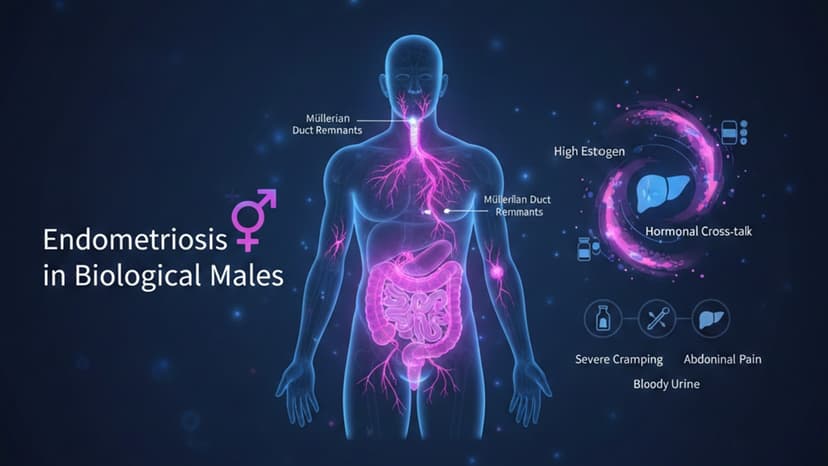
Endometriosis, typically confined to discussions about female reproductive health, is now being recognized in rare instances within biological males. Medical literature documents fewer than 20 such cases, where endometrial-like tissue grows in atypical locations like the bladder or abdominal wall. This phenomenon challenges traditional understandings of the disease's origins and spread.
Current theories suggest embryonic remnants, specifically from the Müllerian ducts, may play a role. These remnants might reactivate due to hormonal factors, particularly elevated estrogen levels. Such elevations are often observed in men undergoing prolonged estrogen therapy for prostate cancer or those with severe liver cirrhosis, impacting estrogen metabolism. Obesity and advanced liver disease are also considered potential risk factors.
Despite its rarity, symptoms can include severe cramping and abdominal pain. However, in many documented cases, the tissue is discovered incidentally during surgeries for other conditions. These male cases are crucial in validating theories beyond retrograde menstruation, emphasizing endometriosis as a complex systemic disease influenced by cellular and hormonal factors.
Insights from these rare occurrences are reshaping the narrative around endometriosis. They suggest a shift towards personalized treatments focusing on embryonic cellular markers and targeted hormonal regulators, potentially moving beyond traditional period suppression or surgical excision. This broader understanding could lead to more effective diagnostics and therapies for a wider population.