Home / Health / Plague's Human Toll Unearthed in Ancient Mass Grave
Plague's Human Toll Unearthed in Ancient Mass Grave
31 Jan
Summary
- Ancient mass grave in Jordan offers new details on Justinian's Plague.
- DNA analysis confirms Yersinia pestis as the plague's cause.
- Victims' diverse demographics reveal societal impact and mobility.

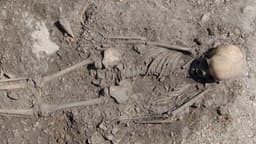
Archaeological research in Jerash, Jordan, has verified the first Mediterranean mass grave from the Justinian Plague, a pandemic that ravaged the Byzantine empire from AD 541 to AD 750. This discovery, detailed in the Journal of Archaeological Science, offers unprecedented empirical evidence of the plague's impact on human mobility, urban life, and societal vulnerability.
DNA extracted from victims' teeth at the Jerash burial site, identified as a single mortuary event, confirms Yersinia pestis as the plague's microbial agent. The research, involving experts from the University of South Florida and Florida Atlantic University, reveals a diverse mix of men, women, and ages, indicating a largely mobile population trapped by the crisis. This demographic diversity parallels modern pandemic experiences, such as travel restrictions during COVID-19.
Excavations at Jerash's hippodrome uncovered over 200 individuals, a transient population consistent with a regional trade hub. Researchers emphasize that pandemics are not merely biological events but social crises that deeply affect individuals within their context. The findings challenge historical skepticism about the plague's severity by providing tangible evidence of its devastating human toll.