feedzop-word-mark-logo
searchLogin
Feedzop
homeFor YouIndiaIndia
You
bookmarksYour BookmarkshashtagYour Topics
Trending
Terms of UsePrivacy PolicyAboutJobsPartner With Us

© 2026 Advergame Technologies Pvt. Ltd. ("ATPL"). Gamezop ® & Quizzop ® are registered trademarks of ATPL.

Gamezop is a plug-and-play gaming platform that any app or website can integrate to bring casual gaming for its users. Gamezop also operates Quizzop, a quizzing platform, that digital products can add as a trivia section.

Over 5,000 products from more than 70 countries have integrated Gamezop and Quizzop. These include Amazon, Samsung Internet, Snap, Tata Play, AccuWeather, Paytm, Gulf News, and Branch.

Games and trivia increase user engagement significantly within all kinds of apps and websites, besides opening a new stream of advertising revenue. Gamezop and Quizzop take 30 minutes to integrate and can be used for free: both by the products integrating them and end users

Increase ad revenue and engagement on your app / website with games, quizzes, astrology, and cricket content. Visit: business.gamezop.com

Property Code: 5571

Home / Health / Stomach Bug Protein Fights Alzheimer's Plaque

Stomach Bug Protein Fights Alzheimer's Plaque

7 Dec, 2025

•

Summary

  • A protein from H. pylori bacteria reduces amyloid-beta and tau buildup.
  • This protein fragment, CagAN, shows promise in blocking Alzheimer's hallmarks.
  • Research suggests bacterial proteins could offer new Alzheimer's therapies.
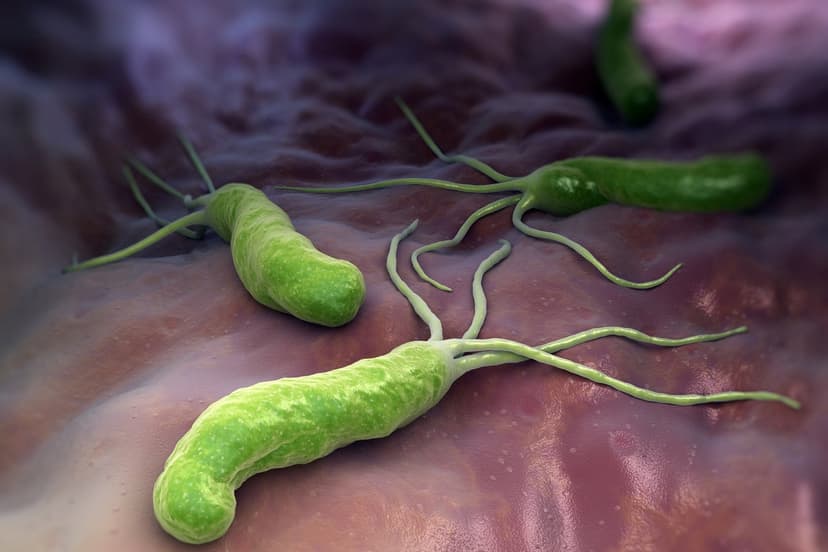
Stomach Bug Protein Fights Alzheimer's Plaque

A breakthrough in Alzheimer's research has emerged from an unexpected source: a bacteria typically linked to stomach ulcers. Scientists have found that a specific protein fragment from Helicobacter pylori can inhibit the formation of both amyloid-beta and tau proteins, which are central to Alzheimer's disease pathology. This discovery challenges current treatment paradigms that focus solely on amyloid.

Researchers identified that a fragment of the H. pylori protein CagA, named CagAN, effectively reduced the aggregation of amyloid-beta and tau in laboratory settings. This suggests that bacterial proteins could offer a novel therapeutic avenue for preventing or slowing Alzheimer's progression, potentially by disrupting the molecular mechanisms driving the disease.

Beyond Alzheimer's, this bacterial fragment has also shown an ability to block the aggregation of proteins implicated in type 2 diabetes and Parkinson's disease. While the research is in its early stages and confined to lab experiments, these findings open promising new paths for developing treatments against a range of amyloid-related disorders.

Disclaimer: This story has been auto-aggregated and auto-summarised by a computer program. This story has not been edited or created by the Feedzop team.
Early research shows a protein fragment from H. pylori can block the buildup of proteins linked to Alzheimer's, suggesting potential therapeutic strategies, but it is not a direct treatment yet.
A fragment of the CagA protein from H. pylori, called CagAN, has been found to significantly reduce the formation of amyloid-beta and tau aggregates in lab studies.
Amyloid-beta forms plaques outside brain cells disrupting communication, while tau forms tangles inside cells, leading to cell death and the hallmark features of Alzheimer's.

Read more news on

Healthside-arrow
trending

Anthropic AI triggers 'SaaSpocalypse'

trending

HAL out of stealth jet

trending

India U19 World Cup Semi

trending

IT index plummets

trending

Tanker stalls Mumbai-Pune expressway

trending

Yuki Bhambri achieves milestone

trending

ChatGPT outage reported today

trending

2026 Winter Olympics details

trending

HDFC Bank share price target

You may also like

Cancer Link Slashes Alzheimer's Risk

6 hours ago • 5 reads

article image

Blood Sugar Spikes Linked to Higher Alzheimer's Risk

29 Jan • 29 reads

article image

Home Alzheimer's Test: Finger Prick Breakthrough?

19 Jan • 75 reads

article image

Blood Sugar Spikes Linked to Alzheimer's Risk

16 Jan • 121 reads

article image

Microplastics Invade Human Brains

5 Jan • 181 reads

article image