

Home / Environment / Yamuna's Collapse: Gurgaon's 70% Pollution Load Exposed
Yamuna's Collapse: Gurgaon's 70% Pollution Load Exposed
6 Apr
Summary
- Gurgaon contributes nearly 70% of Haryana's pollution entering the Yamuna.
- Dissolved oxygen in Delhi's Yamuna reached near-lethal levels by mid-2025.
- Multiple districts, including Sonipat and Jhajjar, significantly contribute to pollution.
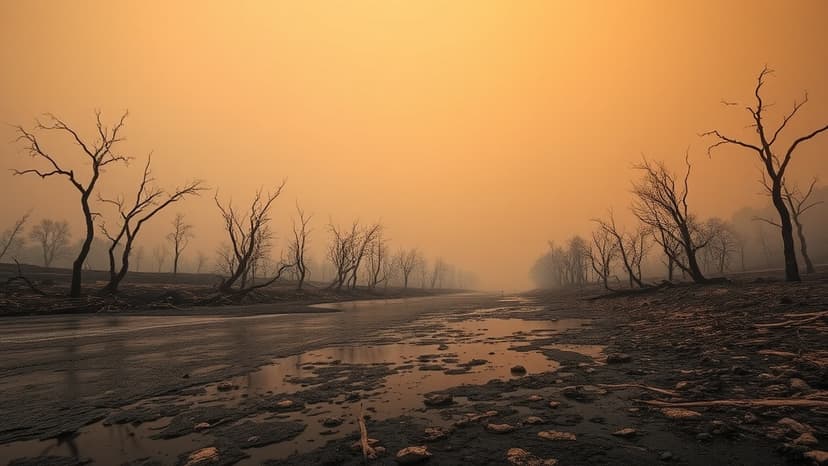
Gurgaon is identified as the primary source of pollution affecting the Yamuna River from Haryana, contributing approximately 70% of the total load. Monitoring data from 2021 to 2025 reveals that while Gurgaon's drains are major conduits, discharges from Sonipat, Jhajjar, Bhiwani, and Faridabad collectively worsen the river's condition.
By mid-2025, critically low dissolved oxygen levels, below thresholds for aquatic survival, were recorded in several stretches within Delhi. In Gurgaon, key pollution indicators like BOD have risen dramatically, reaching levels nearly 50 times the safe limit, with total suspended solids and faecal coliform counts also alarmingly high, indicating massive untreated sewage discharge.
Sonipat is an emerging critical contributor, with its drains showing elevated BOD levels and a mixed pollution profile including agricultural runoff. Jhajjar and Bhiwani, though contributing lower volumes, exhibit severe chemical contamination from industrial waste. Faridabad consistently shows high levels of sewage inflow, contributing to the river's ongoing degradation.
Environmental activists attribute the river's dire state to systemic failures in waste management across multiple entry points. Despite ongoing interception and diversion works, untreated wastewater continues to flow, ensuring the Yamuna remains biologically compromised as it passes through Delhi, a situation that persisted as of early 2026.
