Home / Environment / Yamuna Froth: Detergents and Plants Cause Toxic Foam
Yamuna Froth: Detergents and Plants Cause Toxic Foam
22 Dec
Summary
- Human-made surfactants from laundry and natural saponins from plants cause Yamuna froth.
- Sudden opening of Okhla barrage gates exacerbates foaming due to high turbulence.
- Sewage and effluent treatment plants struggle to remove these surfactants effectively.
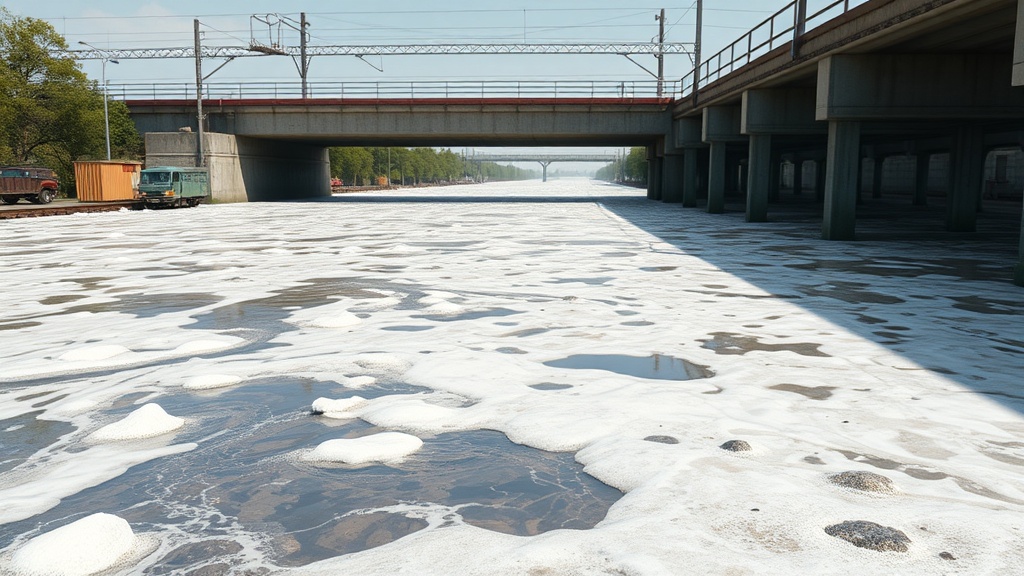
A comprehensive study has pinpointed the primary causes of the excessive froth observed in the Yamuna River, attributing it to a combination of industrial detergents and natural plant compounds. Human-made surfactants, particularly from laundry activities, along with saponins from water hyacinth, contribute to the foamy appearance. This natural phenomenon is amplified when the Okhla barrage gates are opened, creating significant turbulence that exacerbates the foaming.
The research also critically assessed the performance of Delhi's water treatment infrastructure. It found that existing sewage and effluent treatment plants are inadequately equipped to remove these specific surfactants. While these plants show efficiency in reducing organic load, their capacity to filter out saponins remains consistently poor, failing to mitigate the frothing issue effectively.