

Home / Environment / WWII Toxic Time Bomb Lurks Beneath German Seas
WWII Toxic Time Bomb Lurks Beneath German Seas
29 Mar
Summary
- Millions of tons of WWII munitions lie on the Baltic seafloor.
- These decaying weapons release toxic explosives into marine life.
- A research expedition is mapping the underwater contamination.
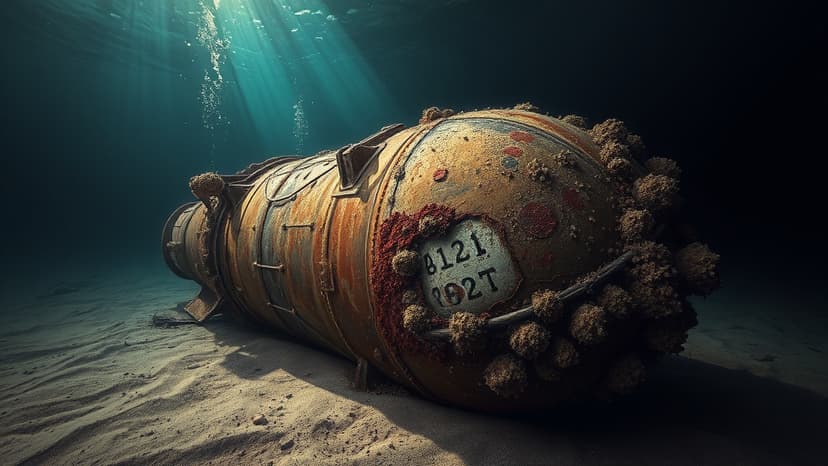
A significant environmental threat looms beneath the waves of the Baltic Sea, where an estimated 1.6 million tons of World War II munitions are slowly deteriorating on the seafloor. Scientists are warning that the corroding metal casings of these forgotten weapons, including rockets, artillery shells, and bombs, are releasing toxic contaminants like TNT into the marine ecosystem.
To address this danger, a research vessel, the Alkor, set sail from Kiel, a bay heavily polluted with unexploded ordnance. A team of scientists from Germany, Poland, and Lithuania is using underwater robots and sample probes to map the extent of the contamination. They are also studying the impact on marine life by dispersing mussels to test ingestion levels.
The Baltic's shallow waters and limited outflow mean that pollution tends to linger. This issue has gained new urgency due to increased undersea construction for pipelines, cables, and wind farms. While traces of explosives have been found in seafood, researchers state that current concentrations do not pose an immediate danger to human consumption. However, sunken warships also carry significant fuel loads, presenting another major environmental hazard.
Germany is pioneering efforts to tackle this global problem. A pilot project is underway in Luebeck Bay to destroy munitions on a floating platform, funded with an initial 100 million euros. While contractors with experience in clearing ordnance for wind farms are involved, the long-term funding needed for a comprehensive solution remains uncertain, leaving the timeline for similar projects in other areas, like off Kiel, unknown.
