Home / Environment / Giant Wētā Roars Back: NZ Insect's Remarkable Comeback
Giant Wētā Roars Back: NZ Insect's Remarkable Comeback
16 Oct
Summary
- Thousands of giant insects released into the wild as part of a breeding program.
- Wētāpunga were once endangered due to habitat loss and predators.
- Conservation success offers hope for other endangered invertebrate species.
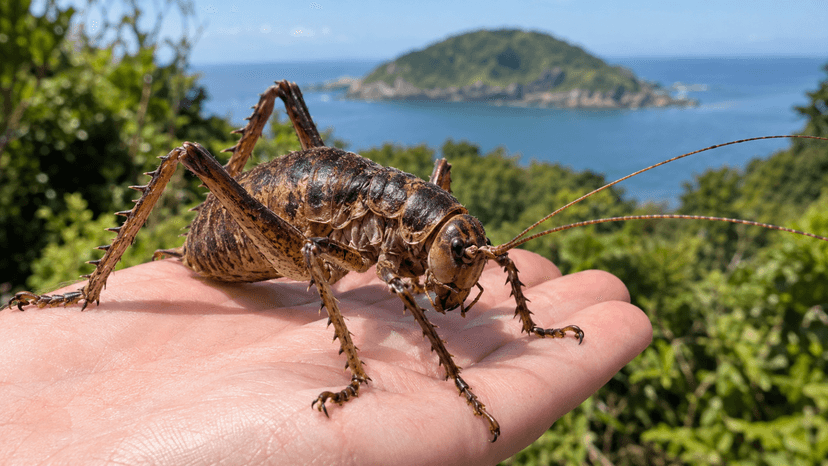
The wētāpunga, a giant insect native to New Zealand, is experiencing a remarkable recovery, thanks to a dedicated conservation breeding program. These insects, which can weigh over 35 grams and reach up to four inches in length, were once critically endangered.
Their decline was primarily due to habitat destruction and introduced predators following human settlement. As flightless creatures, they were particularly vulnerable. By the 1990s, the species had vanished from New Zealand's mainland, surviving only on Hauturu/Little Barrier Island.
Conservationists at Butterfly Creek and Auckland Zoo developed specialized techniques for raising young wētā, known as nymphs. They provided fresh foliage, protein-rich fish flakes, and leaf litter, while communal mesh cages proved effective for rearing large numbers.
Since 2010, over 11,000 wētāpunga have been released into predator-free islands and sanctuaries. Encouragingly, these insects have established self-sustaining populations. Surveys indicate a significant population increase, with an average of 28.5 wētāpunga per hour found in new habitats, compared to 1.4 on Little Barrier Island.
In 2022, the species' conservation status was upgraded from 'Endangered' to 'Threatened -- Nationally Increasing', a testament to its growing numbers. This success provides valuable lessons for protecting other endangered invertebrates, such as the Canterbury knobbled weevil.


