Home / Environment / Wild Meadow Magic: Nature Reclaims Field Without Seeds
Wild Meadow Magic: Nature Reclaims Field Without Seeds
23 Aug
Summary
- A four-acre field transformed with over 150 plant species.
- No expensive wildflower seeds or interventions were used.
- A single annual hay-cut every summer revitalized the meadow.
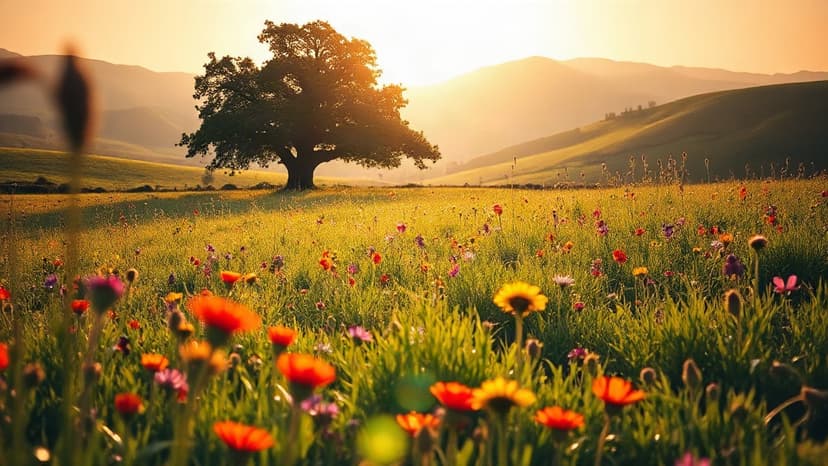
A four-acre meadow in north Norfolk, England, once dominated by a single crop, now boasts over 150 species of wildflowers and wildlife. This significant ecological transformation was achieved through a surprisingly simple method: a single annual hay-cut. This approach eschews the common practice of sowing expensive commercial wildflower seed mixes.
The field, owned by farmer Derek Sayer, was left uncultivated in 2005. By 2011, his son, Professor Carl Sayer, began implementing an annual hay-cut. This practice, maintained yearly, has seen thistles and annual weeds recede, replaced by a flower-rich perennial sward.
This method of meadow restoration, detailed in Restoration Ecology, challenges conventional conservation approaches. It suggests that patience and minimal intervention can be more effective than costly seeding. The practice of cutting and removing the hay each August also reduces soil nutrients, allowing more delicate wildflowers to thrive.
The success of Sayer's Old Meadow is notable, especially as 98% of England and Wales's meadows have been lost over the past century. The presence of species like yellow rattle, known as a 'meadow maker,' further enhances biodiversity by creating space for other plants.
This 'self-willed' meadow is rich in locally-adapted plants, contrasting with generic 'McMeadows.' The Sayers' approach is not only cost-effective but has also attracted wildlife, including barn owls, and is a valued natural space for the local community.


