Home / Environment / Beyond Rain: The Real Reason City Trees Collapse
Beyond Rain: The Real Reason City Trees Collapse
14 Jul
Summary
- Urban trees are weakened over years by concretisation and utility work.
- Mumbai saw over 1,100 trees collapse in one week, exceeding last year's total.
- Mature trees provide essential ecological services that saplings cannot replace.
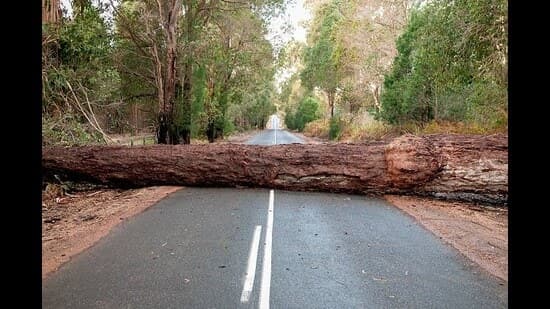
Mature trees in Indian cities are collapsing not solely due to monsoon rains, but due to years of damage from urban development. Practices like concretisation around trunks, excavation, and utility work have progressively weakened these vital urban assets. In July 2026, Mumbai experienced over 1,100 tree collapses within a single week, a figure surpassing the entire previous monsoon season and resulting in loss of life.
This crisis extends beyond Mumbai to other Indian cities, including Delhi. Civil projects often overlook the survival of existing trees, with inadequate Tree Protection Plans and root zone neglect. While cities celebrate plantation drives, these saplings cannot replicate the ecological services provided by mature trees, such as shade, carbon storage, and pollution removal.
Legal bodies have recognised trees as living beings deserving high protection. However, institutional responses remain fragmented, with no accessible emergency mechanisms for damaged trees. Climate change exacerbates the problem, making scientific tree management crucial. Cities must treat trees as critical infrastructure, mandating Tree Protection Plans and investigating every tree failure to prevent further preventable losses.


