Home / Environment / Rare Tragopan's Fight: Captive Breeding vs. Wild Survival
Rare Tragopan's Fight: Captive Breeding vs. Wild Survival
11 Dec
Summary
- Only 3,000-9,500 mature western tragopans remain in a single subpopulation.
- Captive breeding success at Sarahan Pheasantry faces habitat restoration challenges.
- Climate variability threatens breeding synchrony and chick survival in the wild.
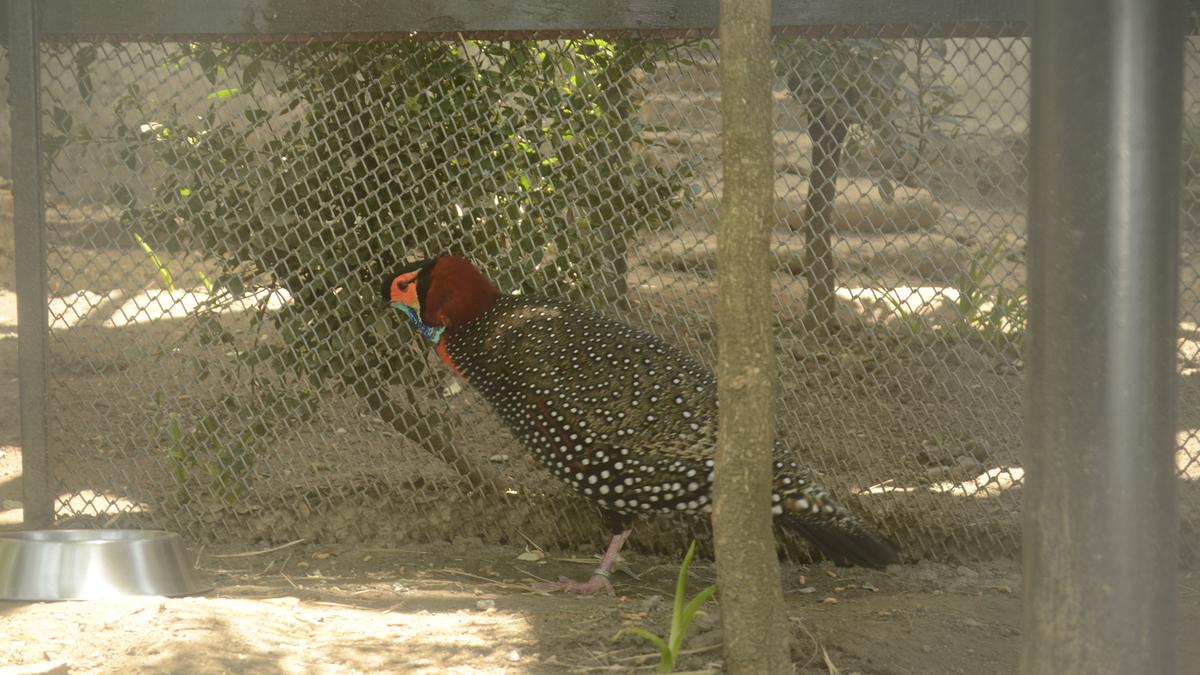
The western tragopan, an endangered pheasant and Himachal Pradesh's state bird, survives in fragmented pockets across the Himalayas. Conservation efforts have focused on captive breeding, with notable success at the Sarahan Pheasantry, which now houses 46 birds. However, experts caution that these ex-situ programs are insufficient without parallel in-situ habitat protection and restoration.
Despite decades of investment, the species' wild population remains critically low, estimated between 3,000 and 9,500 individuals. Climate change presents a significant threat, altering breeding seasons and insect availability, crucial for chick survival. The slow disruption of these natural cycles challenges the species' persistence in its native forests.
Recent attempts at reintroduction into the wild have been stalled, partly due to budgetary constraints and the need for extensive research on release sites and predator monitoring. Community involvement and ecotourism are emerging as vital components for incentivizing local stewardship and protecting the tragopan's natural habitat.