Home / Environment / Art Reef Rises from Power Plant Debris
Art Reef Rises from Power Plant Debris
4 Sep
Summary
- Sculptures made from decommissioned power stations now form an artificial reef.
- The underwater art installation aims to foster marine ecosystem development.
- Marine life is colonizing the structures, altering their appearance.
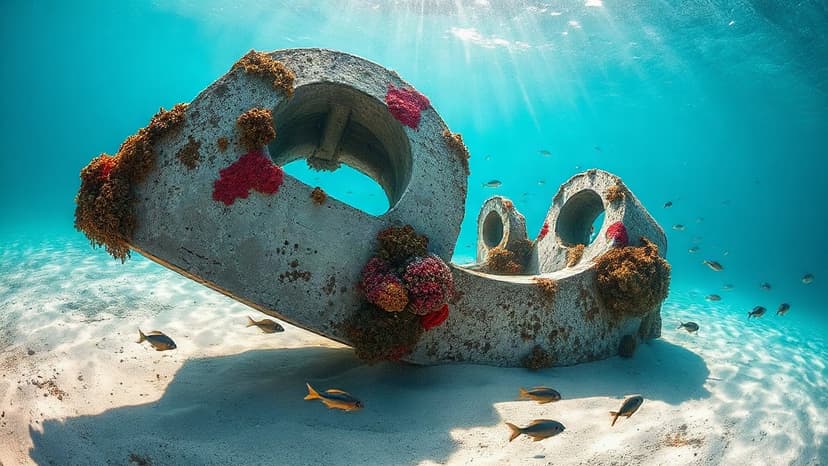
Thirteen sculptures crafted from materials salvaged from decommissioned coal-fired power stations now lie beneath the Atlantic Ocean. Artist Alexandre Farto, known as Vhils, created these pieces for the EDP Art Reef, an underwater exhibition designed to function as an artificial reef near Albufeira, Portugal. The installation utilizes materials from former EDP thermal power stations in Sines and Carregado, Portugal, and Soto de Ribera in Spain.
The project, a collaboration between EDP and Vhils' team over three years, aims to blend art with marine ecosystem development. The iron and concrete sculptures, treated for underwater use, are strategically placed more than 10 meters deep and approximately a mile offshore. This initiative diverts industrial material from conventional disposal routes, offering a second life for components associated with electricity generation.
Vhils designed the sculptures to evolve, with corrosion, sediment, and biological growth expected to gradually alter their appearance. Marine organisms are colonizing the structures, becoming an integral part of the evolving artwork. The exhibition area spans about 1,250 square meters, with the tallest piece reaching 5.3 meters. Divers with appropriate certification can visit the site.
Efforts to enhance the reef include transplanting coral fragments, with some previously impacted by fishing nets. Researchers from the University of Algarve are monitoring the developing marine life, which already includes octopuses, spider crabs, urchins, and various fish. This project aligns with EDP's broader transition away from coal towards renewable energy sources.


