Home / Environment / Uttarakhand's Bare Peaks: A Climate Crisis Unfolds
Uttarakhand's Bare Peaks: A Climate Crisis Unfolds
20 Jan
Summary
- Uttarakhand faces unprecedented dry spell as winter months pass without rain or snow.
- Climate change is causing a fundamental shift, eroding winters and extending summers.
- Weakening Western Disturbances due to rising temperatures are reducing Himalayan snowfall.
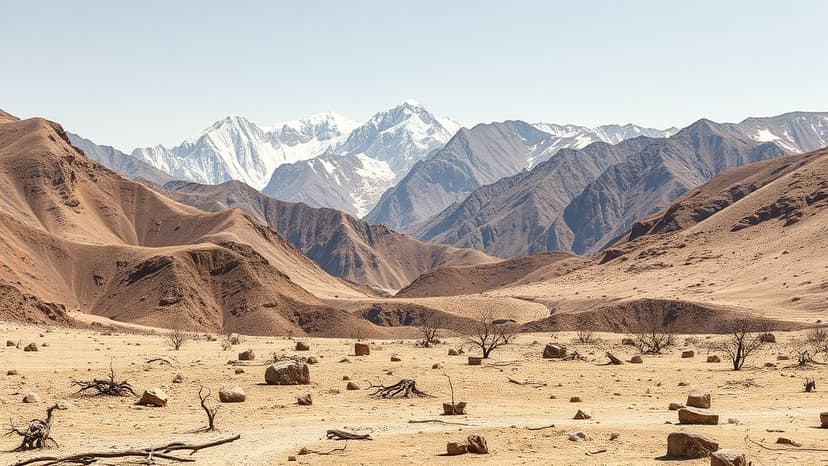
Uttarakhand is currently grappling with a severe climate crisis, marked by a profound lack of precipitation. The months of November and December passed without any rain or snow, and with over half of January elapsed, relief remains absent. Consequently, prominent peaks and tourist destinations across the state, including Om Parvat, Adi Kailash, Kedarnath, Badrinath, and Munsiyari, are unusually bare.
This dry spell is significantly impacting local economies, particularly horticulture, agriculture, and the vital tourism sector, which heavily relies on winter snow. Scientific analysis indicates this is not a temporary fluctuation but a fundamental shift, with winters diminishing and summers lengthening over the past two decades. Data reveals that heavy snowfall is now delayed until late winter or early spring months.
The scientific explanation points to rising atmospheric and ground temperatures. A primary factor is the weakening of Western Disturbances, which are shifting northward and losing moisture access. This leads to weaker weather systems, reduced precipitation, and drier conditions across northwestern India. Glaciologists warn that the Himalayas, often termed the "Third Pole" due to their vast ice reserves, are under severe threat from these changing patterns.