Home / Environment / British Trees Snap: Climate Change's Silent Attack
British Trees Snap: Climate Change's Silent Attack
10 Jul
Summary
- Summer branch drop occurs when trees shed limbs to conserve water.
- Over 400 trees died at Kew Gardens during the 2022 heatwave.
- Drought-resistant species are needed for future UK urban planning.
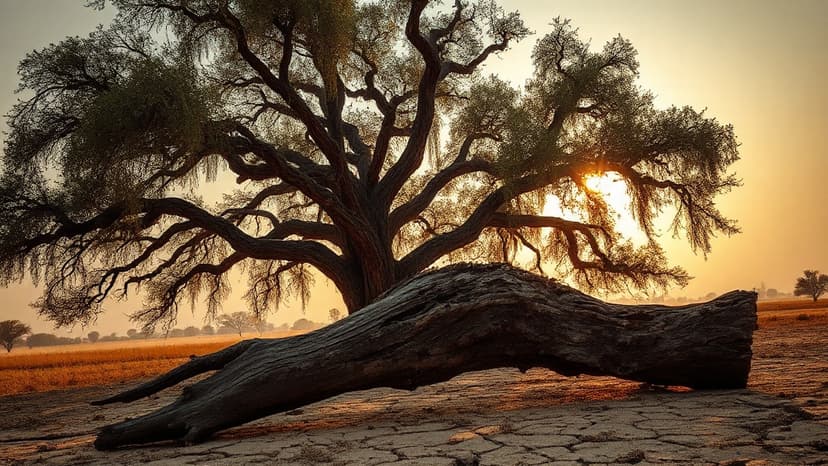
British summers are witnessing an alarming trend of "summer branch drop," where mature trees shed large branches as a survival mechanism against extreme heat and drought. This response, driven by climate change, helps trees conserve vital moisture, but leaves them scarred and vulnerable. The Royal Botanic Gardens, Kew, reported over 400 tree deaths during the 2022 heatwave, with predictions suggesting up to 50% of existing trees could become highly sensitive to climate shifts by 2090.
The phenomenon is exacerbated by "hot droughts," where intense heat coupled with dry soil severely stresses trees. Normally, trees maintain internal temperature and photosynthesize through a constant water flow from roots to leaves. However, rapid moisture loss to hot, dry air creates immense internal pressure, potentially causing fatal blockages known as embolisms. This prolonged strain depletes carbohydrate reserves, limiting growth and making trees susceptible to insects and fungal attacks.
Adapting urban planning and park management is crucial for preserving greenery. Experts advocate for succession planting, introducing drought-resistant species alongside existing trees to create resilient landscapes capable of withstanding higher temperatures. This proactive approach aims to maintain diverse tree cover and ensure the ecological health of Britain's environments for future generations.


