Home / Environment / Yellow Poison: UP Villages Choked by Toxic Sludge
Yellow Poison: UP Villages Choked by Toxic Sludge
17 Aug
Summary
- Hazardous sludge turns UP soil and water bright yellow.
- Hexavalent chromium contamination causes liver and kidney issues.
- Government response described as 'snail-paced' by an advocate.
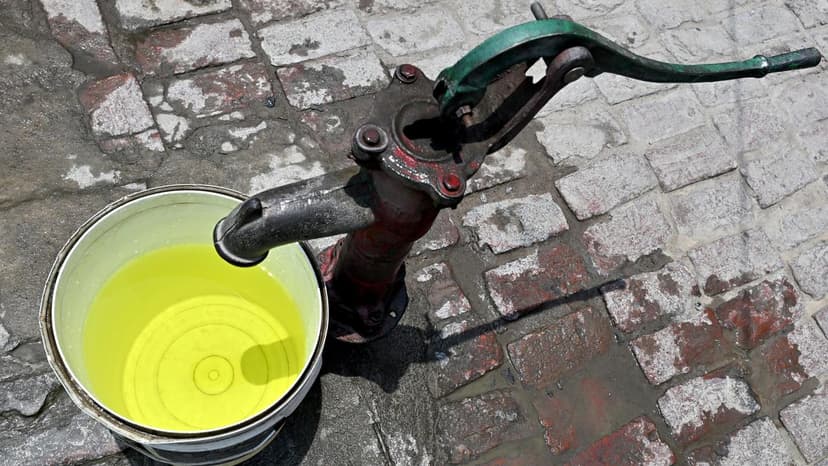
In Uttar Pradesh's Fatehpur, Kanpur Dehat, and Kanpur Nagar districts, hazardous basic chrome sulphate sludge has contaminated land and groundwater, causing soil to turn a striking yellow. Residents like Daya Devi in Chhiwali village are experiencing severe health issues, including stomach pain and liver infections, attributed to the toxic hexavalent chromium leaching into their water supply. State government data from 2025 indicates that 73-96% of people in affected areas have above-permissible chromium (VI) levels in their blood.
The National Green Tribunal (NGT) has reported that hexavalent chromium can lead to stomach ulcers, cancers, and severe kidney and liver damage. Factories producing chromium sulphate for the tanning industry, prevalent since the 19th century in Kanpur, are identified as the source. Despite past shutdowns and NGT orders in 2005 and 2017, fresh dumps continue to appear, often prompting government action only after NGT intervention or media reports, such as in Purwamir village in 2026.
Katyayni, an amicus curiae for the NGT, criticizes the government's efforts as 'snail-paced,' emphasizing the urgent need for faster identification of problem areas, dump removal, and medical facilities. The lack of local heavy metal testing facilities further exacerbates the situation. Some villages, like Chhiwali, are not even officially recognized as affected, yet residents describe water turning yellow and bitter, forcing reliance on damaged pipelines or contaminated handpumps.
Efforts to remediate the contaminated sites, like the massive chromium dump in Rania, Kanpur Dehat, have faced delays, with removal orders for sites dating back to 1976 only recently completed. Even then, boundary walls to prevent dust spread remain unerected. The contamination also affects villages like Shivnathpurwa and Chauhanpurwa, where residents report severe illnesses in children, liver infections, and costly daily expenses for safe drinking water, highlighting the disproportionate impact on the poor.


