
Home / Environment / Toronto's Toxic Past Now Urban Oasis
Toronto's Toxic Past Now Urban Oasis
3 Jun
Summary
- Toronto's waterfront transformed from toxic industrial site to ambitious urban project.
- The Don River was returned to its natural course, creating a new island.
- The revitalized waterfront prioritizes people, parks, art, and sustainability.
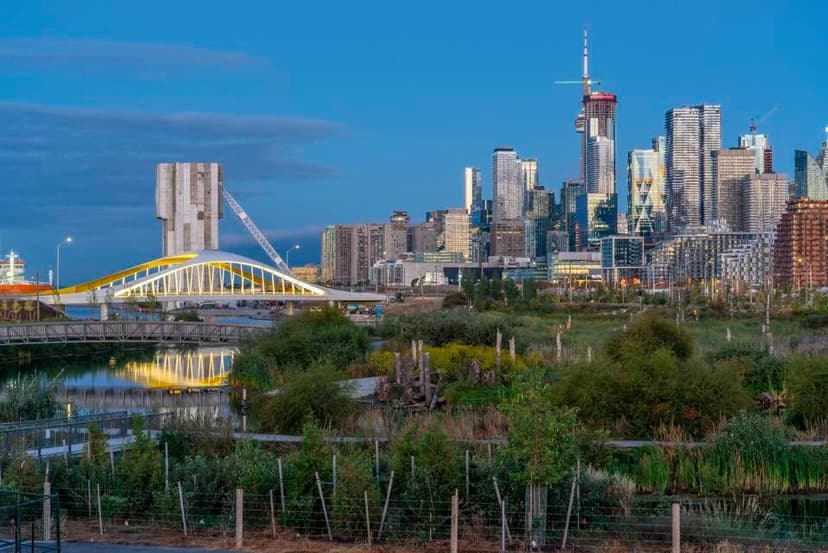
Toronto's waterfront has undergone a remarkable transformation from its past as a polluted industrial zone to a leading urban revitalization project. Once a toxic dumping ground and a marshland vital for Indigenous peoples, the area was industrialized, severing the city's connection to Lake Ontario and leaving it vulnerable to flooding.
Following the devastation of Hurricane Hazel in 1954, Toronto began to reconsider its relationship with its waterfront. A 1999 task force identified an unprecedented development opportunity, leading to the establishment of Waterfront Toronto in 2001. This initiative, backed by substantial government funding, has reshaped nearly 2,000 acres.
The project has successfully mitigated flood risks and facilitated real estate development while prioritizing people and nature. The Don River now flows through a new, naturalized valley, forming the 98-acre island of Ookwemin Minising, meaning "place of the black cherry trees."
Ookwemin Minising is set to house over 15,000 residents, with half dedicated to green space. Biidaasige Park, featuring the Lassonde Art Trail, is a significant public art initiative. Slated for major openings in 2026, the revitalization includes new housing, greenspace, and art, like Kent Monkman's "The Colony," celebrating ecological and cultural history.
