Home / Environment / Thwaites Glacier: A Ticking Time Bomb Beneath Antarctica?
Thwaites Glacier: A Ticking Time Bomb Beneath Antarctica?
1 Jan
Summary
- Thwaites Glacier's potential collapse could raise global sea levels by 2 feet.
- Warm ocean currents melt the glacier's floating ice shelf from below.
- Scientists fear a self-reinforcing melt cycle could destabilize the glacier.
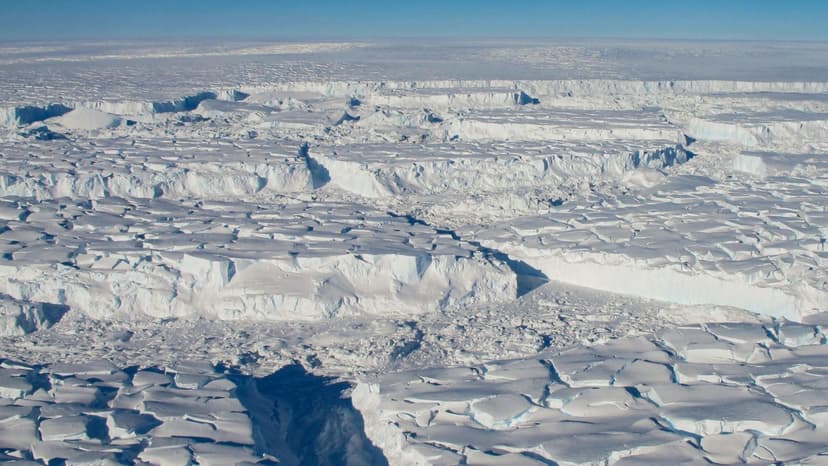
Scientists are closely monitoring the Thwaites Glacier in Antarctica, often called the "Doomsday Glacier," due to concerns about its potential collapse. This massive ice formation, roughly the size of Florida, could contribute two feet to global sea levels if it melts entirely. Current research focuses on understanding the rate of melting caused by warm ocean currents eroding the glacier's floating ice shelf from below.
Researchers are particularly worried about a feedback loop where the glacier's grounding line retreats inland on a downward-sloping bedrock. This retreat allows more warm seawater to access the glacier's base, accelerating melting and further retreat. This cycle could lead to irreversible destabilization, causing vast amounts of ice to flow into the ocean.
While some recent studies suggest certain catastrophic collapse scenarios are less likely, the overall threat remains significant. Scientists emphasize that reducing carbon emissions is crucial to mitigating the worst outcomes. The ongoing, incremental melting of Thwaites and other Antarctic ice poses an urgent threat to low-lying nations and ecosystems over the coming decades.