
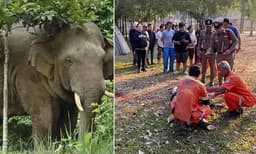

Home / Environment / Thailand Uses Birth Control Vaccine on Wild Elephants
Thailand Uses Birth Control Vaccine on Wild Elephants
13 Feb
Summary
- Birth control vaccine administered to wild elephants to curb human-animal conflict.
- Vaccine prevents pregnancy for seven years, allowing elephants to reproduce later.
- Initiative aims to reduce deadly confrontations and crop damage incidents.
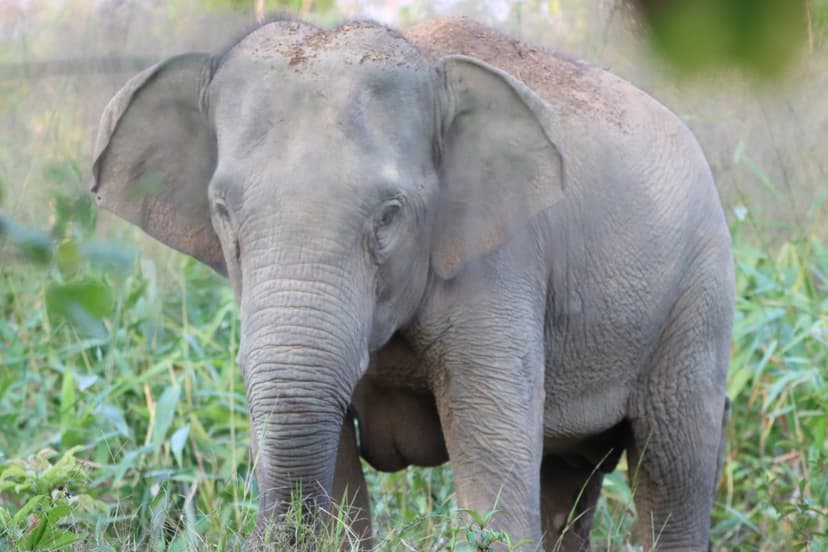
Thailand has initiated a novel program using a birth control vaccine on wild elephants to address the growing problem of human-animal conflict. As farms expand into elephant habitats, elephants are increasingly forced into residential areas searching for food, leading to dangerous confrontations. Last year, such conflicts resulted in 30 human deaths and extensive crop damage.
The U.S.-made vaccine, which prevents ovulation fertilization for seven years, was successfully trialed on domesticated elephants before being administered to three wild elephants in eastern Trat province. This initiative specifically targets wild elephants in regions experiencing high rates of human-elephant conflict, where the wild elephant birth rate is nearly double the national average. Approximately 800 wild elephants reside in these conflict-prone areas, posing a significant risk to nearby communities.
In conjunction with the vaccination drive, Thai authorities are also implementing other measures. These include creating new food and water sources within forests, erecting protective fencing, and deploying rangers to guide straying elephants back to the wild. Despite these efforts, a recent court-ordered operation to relocate elephants in Khon Kaen province sparked public outcry after one elephant died during the process, prompting an investigation into the incident.