Home / Environment / Ghats Forests Transform: Thorn Scrub Replaces Rich Vegetation
Ghats Forests Transform: Thorn Scrub Replaces Rich Vegetation
31 Jan
Summary
- Climate change is driving forests in Tamil Nadu toward thorny vegetation.
- Significant forest cover loss occurred in both Western and Eastern Ghats.
- Ecological shifts threaten herbivores, fruit-bearing trees, and small mammals.
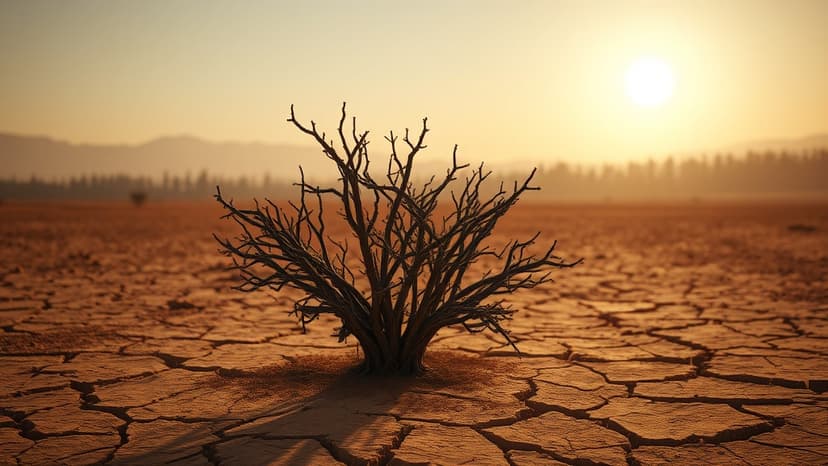
Forest habitats across Tamil Nadu's Eastern and Western Ghats are undergoing a dramatic reshaping due to climate change. Rising temperatures and erratic rainfall patterns are causing a shift from evergreen and deciduous vegetation towards thorn-dominated forests. This transformation, documented over a three-year period ending in 2024, signifies a major ecological reorganization rather than a simple decline in tree cover.
In the Western Ghats alone, the study recorded the loss of approximately 249 sq km of evergreen and 720 sq km of deciduous forests. Concurrently, thorny forest cover expanded by nearly 969 sq km. A comparable pattern was observed in the Eastern Ghats, where 54 sq km of evergreen and 716 sq km of deciduous forests were replaced by thorny vegetation.
These climatic stressors are not only reducing biodiversity and disrupting carbon cycles but also increasing vulnerability to invasive species and wildfires. The decline in broad-leaf species regeneration facilitates the intrusion of thorny plants, potentially impacting mega herbivores like elephants by limiting food sources. Furthermore, the reduction of riparian forests and drying of high-altitude wetlands could disrupt the habitats and water sources for various species.
Researchers propose several measures to mitigate these changes, including the removal of invasive species, enhanced fire management, soil and water conservation efforts, and promoting afforestation with native trees. These actions could help slow or even reverse the observed ecological shifts.