


Home / Environment / Taj Trapezium Zone Tree Rules Simplified Beyond 5km
Taj Trapezium Zone Tree Rules Simplified Beyond 5km
6 Apr
Summary
- Tree felling, pruning rules relaxed beyond 5 km of Taj Mahal.
- New guidelines promote agroforestry and streamline procedures.
- Activists express concern over potential dilution of environmental controls.
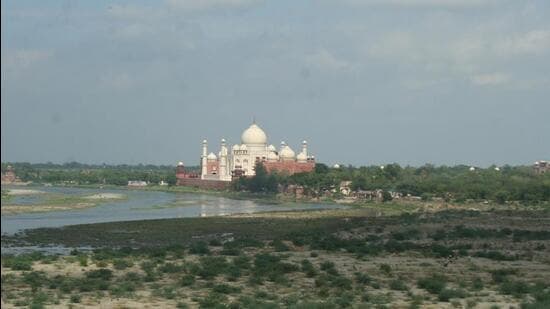
Permission norms for tree felling and pruning within the Taj Trapezium Zone (TTZ) have been simplified for areas located more than 5 kilometers from the Taj Mahal. This relaxation follows recent Supreme Court directives. The social forestry wing of the forest department has introduced fresh guidelines to streamline the process and encourage agroforestry.
These revised norms empower divisional directors or forest officers to grant permissions for felling, trimming, or cutting specified tree species in areas beyond the 5-km aerial radius. This move is considered a significant achievement in simplifying procedures and saving time, thereby boosting agroforestry. The initiative also aims to build a database for potential future relaxations.
Previously, a blanket ban on tree activity was in place following a 2015 Supreme Court order. Subsequent orders in 2025 allowed trimming for infrastructure, felling of certain species like eucalyptus and poplar for social forestry, and removal of trees for safety and traffic management. Penalties for illegal felling were also established in May 2025.
Under the new standard operating procedure issued on March 25, 2026, farmers can fell one to 49 trees of specified species by obtaining local permission. Felling more than 50 trees requires approval from the Central Empowered Committee (CEC) in New Delhi. Non-farmers need CEC approval for up to 49 trees, and Supreme Court approval for more than 50.
Emergency felling for property damage or life protection, and trimming for power lines, can be permitted by local forest officers. However, dry trees require CEC inspection. It is emphasized that within the 5-km radius of the Taj Mahal, all such permissions still require direct Supreme Court approval.
Environmentalists have voiced reservations, calling the relaxation a "dilution of control" and questioning the effectiveness of such committees, warning that any relaxation could be detrimental to environmental protection. The TTZ, established in 1996, covers 10,400 square kilometers across districts in Uttar Pradesh and Rajasthan.
