
Home / Environment / India's 100th Ramsar Site: Surha Tal Lake Gains Global Fame
India's 100th Ramsar Site: Surha Tal Lake Gains Global Fame
5 Jun
Summary
- Surha Tal, India's 100th Ramsar site, is a natural oxbow lake in Ballia.
- The recognition boosts eco-tourism and development opportunities for Ballia.
- This wetland is a vital stopover for migratory birds from Central Asia.
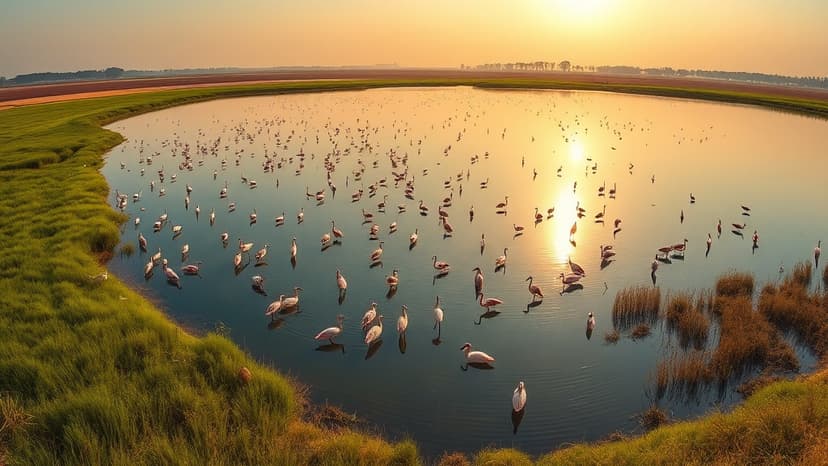
The Jai Prakash Narayan Bird Sanctuary, commonly referred to as Surha Tal, located in the Ballia district of Uttar Pradesh, has achieved international recognition as India's 100th Ramsar site. This designation highlights the ecological significance of the vast natural oxbow lake near Basantpur village. Officials anticipate that this esteemed status will be a pivotal moment for promoting eco-tourism and fostering the comprehensive development of Ballia.
The Ramsar Convention, established in 1971, aims to conserve and sustainably utilize wetlands. Inclusion in its list grants wetlands global recognition, unlocking potential avenues for scientific, technical, and financial support for their preservation. Surha Tal, situated near the Ganga river, provides a vital habitat for numerous water birds, fish, and other aquatic biodiversity, acting as an important resting point for migratory birds.
This wetland ecosystem plays a crucial role in maintaining local water balance, groundwater recharge, and climate stability. Its designation is expected to invigorate eco-tourism, create local employment, and enhance resources for wetland conservation, biodiversity research, and scientific study. Surha Tal is integral to the Central Asian Flyway, a major migratory route for birds traveling between Central Asia and the Indian subcontinent.
Spanning approximately 2,549 to 3,432 hectares, the sanctuary's size expands to about 42 square kilometers during the monsoon. The oxbow lake, formed by the Ganga river, boasts rich aquatic biodiversity, with studies recording around 37 species of aquatic animals, fish, and insects. Annually, thousands of migratory birds, including sarus cranes and various duck species, arrive from regions like Siberia, making it a prime destination for birdwatchers.
