Home / Environment / Surging Glaciers: More Dangerous Than Melting Ice?
Surging Glaciers: More Dangerous Than Melting Ice?
13 Feb
Summary
- 3,100 Arctic glaciers are 'surging', moving much faster than normal.
- Surges make glaciers vulnerable, accelerating ice loss and posing risks.
- These events can cause catastrophic disasters impacting thousands.
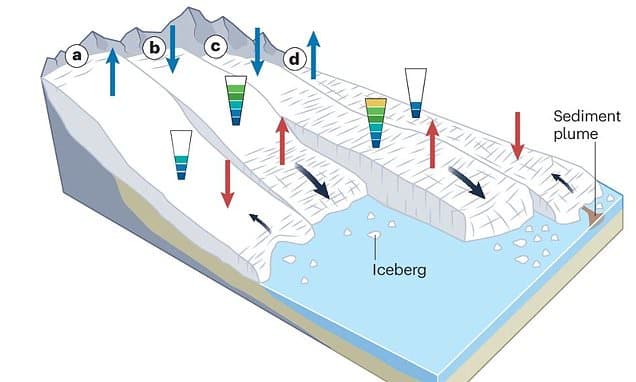
An international research team has discovered 3,100 glaciers in the Arctic, High Mountain Asia, and the Andes that are exhibiting a 'surging' behavior, moving exceptionally fast. Unlike typical glaciers, these surges involve rapid movement over short periods, followed by extended quiet phases. Researchers are investigating underlying conditions, such as subglacial water buildup, as potential triggers for these events.
While a surge might appear as glacial advance, it ultimately makes the glacier vulnerable by rapidly depleting its ice reserves. This can lead to glaciers 'surging themselves to death,' unable to recover in warmer climates. These surges pose serious hazards to nearby communities, including property damage, river blockages, flash floods, and avalanches. The Karakoram Mountains host many of the 81 most dangerous surging glaciers, with others located in Alaska-Yukon and the Caucasus.
Climate change is increasingly influencing the frequency and predictability of these surges, with extreme weather events potentially triggering them earlier than anticipated. While some regions like Iceland may see surges cease, areas like High Mountain Asia and the Canadian Arctic could experience more frequent events. There's even a possibility of surges appearing in the Antarctic Peninsula, a region where they have not been previously observed.