Home / Environment / French Moth's Escape: 150-Year Forest Disaster
French Moth's Escape: 150-Year Forest Disaster
19 Jul
Summary
- An escaped French moth species now devastates North American forests.
- Caterpillars feed aggressively, weakening trees over millions of acres.
- Human transport accelerates the invasive insect's widespread distribution.
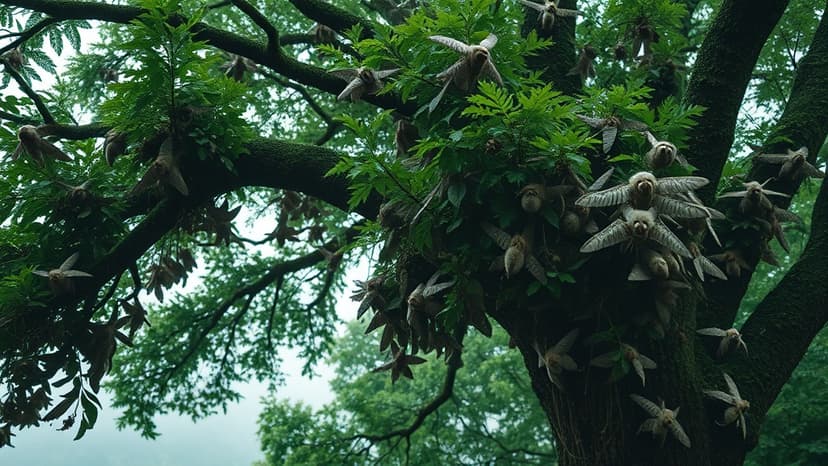
In 1869, French artist Étienne Léopold Trouvelot imported moths to Massachusetts, hoping to cultivate a new silk industry. Some insects escaped, and their descendants, now called spongy moths, have become a major forest pest across North America.
The spongy moth's caterpillars emerge each spring, consuming leaves from numerous tree species, with oaks being a favorite. Repeated defoliation weakens forests, leaving them susceptible to drought, disease, and other insect infestations.
Human activities significantly contribute to the moth's spread. Egg masses can be transported on firewood, vehicles, and outdoor equipment, establishing new populations far from their original locations.
While spongy moth populations naturally fluctuate, outbreak years cause widespread defoliation affecting millions of acres. Although healthy trees can often survive a single year of defoliation, consecutive years deplete their energy reserves, increasing mortality.
Eradication is no longer feasible. Forestry agencies now focus on monitoring, biological controls, and management programs to mitigate damage. The spongy moth serves as a critical case study, influencing modern policies on invasive species and highlighting the long-term ecological consequences of accidental introductions.


