Home / Environment / Cuttlefish Crisis: South Australia Sees 97% Population Drop
Cuttlefish Crisis: South Australia Sees 97% Population Drop
30 Aug
Summary
- Giant cuttlefish numbers fell 97% to 1,811 this year.
- A toxic algal bloom is suspected to be the cause.
- Only 440 eggs were counted, far below millions usually laid.
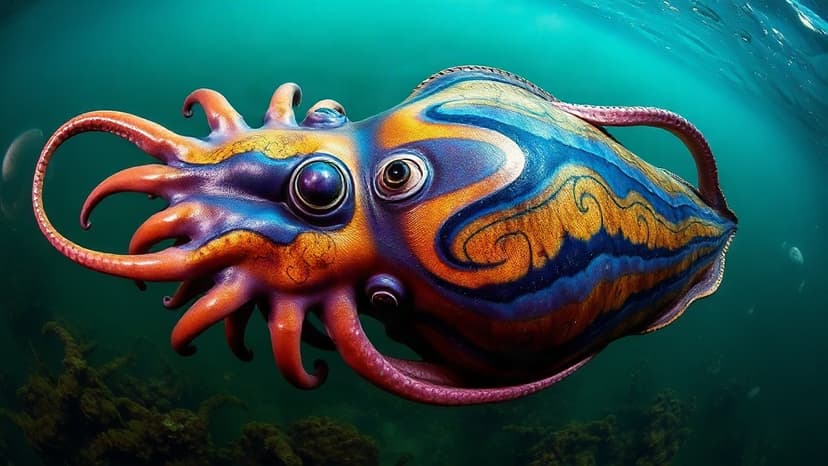
The annual giant cuttlefish mating spectacle on South Australia's coast has seen its lowest turnout on record, with numbers drastically reduced by 97%. This year, only 1,811 cuttlefish were observed, a stark contrast to last year's 63,000, signaling a potentially catastrophic decline for the species.
Marine biologists are investigating a persistent toxic algal bloom, which has impacted the state's coastline for over 18 months, as the likely culprit behind this sharp decrease. The bloom, exacerbated by climate change, severely affects marine habitats and species particularly vulnerable to toxins.
Further alarming data reveals that only 440 eggs were counted along the coast, a minuscule number compared to the millions usually laid by tens of thousands of breeding females. As adult cuttlefish have a short lifespan, the success of this breeding season is critical for the species' future.
Experts are now considering listing the giant Australian cuttlefish as a threatened species. While past population fluctuations have occurred, the current situation, exacerbated by the algal bloom, raises serious questions about the population's ability to recover in the coming years. Researchers are working to determine the full extent of the algal bloom's impact.


