Home / Environment / Toxic Algae Kills Thousands of Rock Lobsters
Toxic Algae Kills Thousands of Rock Lobsters
27 Feb
Summary
- A severe red tide bloom caused a mass 'walkout' of rock lobsters.
- Officials warned against eating crayfish due to potential neurotoxins.
- More than 20 people were removed from beaches trying to collect crayfish.
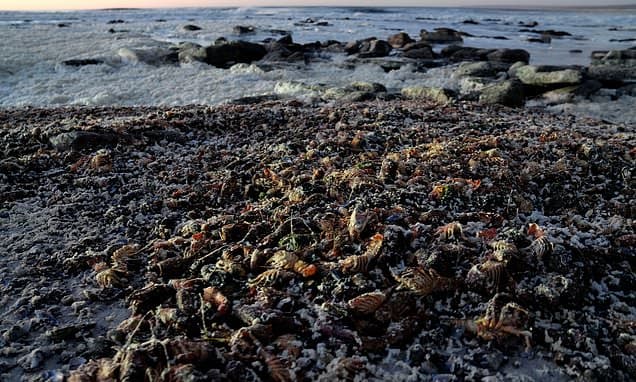
South Africa's west coast is currently experiencing a severe red tide event, a type of toxic algae bloom, resulting in significant marine life die-offs. The bloom has particularly impacted crayfish, also known as rock lobsters, causing them to 'walk out' of the water in large numbers.
At Elands Bay, approximately 220 kilometers north of Cape Town, beaches were found littered with dead and dying rock lobsters and fish. This occurrence is particularly concerning as crayfish are a prized food source in South Africa. The Ministry of Forestry, Fisheries and the Environment has issued a strong warning to the public against collecting or consuming the affected crayfish, as they may contain lethal neurotoxins.
Authorities are actively involved in managing the situation. Ministry officials are working to safely dispose of the dead marine life and rescue any live crayfish that may have survived the toxic conditions. The severity of this red tide has necessitated a police presence on some beaches to prevent people from attempting to gather the contaminated seafood, with over twenty individuals reportedly removed from one beach.
Red tides are a relatively common occurrence along South Africa's coastlines. However, this particular event is described as exceptionally severe. The algae responsible for the red tide proliferate rapidly, leading to a distinct reddish discoloration of the seawater and the release of toxins that are harmful to marine ecosystems.