
Home / Environment / War Zone Power: Solar Offers Resilience
War Zone Power: Solar Offers Resilience
25 May
Summary
- Localized solar power with batteries keeps essential services running.
- Decentralized clean energy is harder to disable during conflict.
- Renewable energy improves public health, safety, and finances.
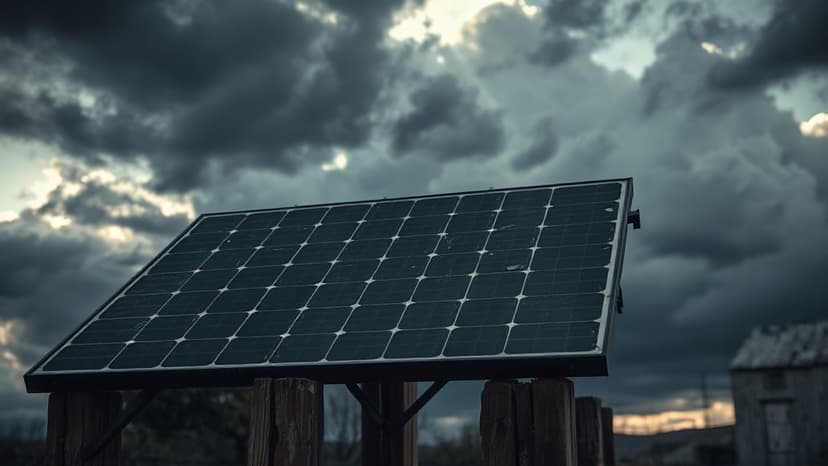
In areas experiencing conflict and energy insecurity, localized solar power is emerging as a crucial resource. When traditional energy infrastructure is threatened or destroyed by war, decentralized clean energy systems, particularly solar power combined with battery storage and electric heating, can maintain essential services.
Ukraine is increasingly adopting solar, heat pumps, and battery storage to counter dependence on damaged grids and unstable fuel supplies. This transition is supported by local and international organizations, highlighting a global trend towards energy independence amidst volatile fuel markets and geopolitical conflicts.
Beyond conflict zones, the resilience offered by solar power is valuable anywhere facing extreme weather or aging infrastructure. It transforms buildings into independent energy hubs, preserving critical functions like refrigeration and communication during outages. Furthermore, renewable energy mitigates the pollution and health impacts associated with fossil fuels, while also offering financial stability through free and local sunlight.
Advocates call for increased government investment in distributed renewable energy, battery storage, and electrification. Individuals can contribute by exploring solar power, battery storage, and efficient electric appliances, supporting policies that expand clean energy infrastructure, thereby enhancing community resilience when grids fail.
