Home / Environment / Dinosaur Bird: The Shoebill's Haunting Beauty
Dinosaur Bird: The Shoebill's Haunting Beauty
24 Nov
Summary
- The shoebill is a nearly five-foot-tall bird with a distinctive, large, driftwood-like beak.
- Found in freshwater swamps across South Sudan and Uganda, its habitat is often remote.
- Listed as Vulnerable, fewer than 5,300 individuals remain due to wetland destruction.
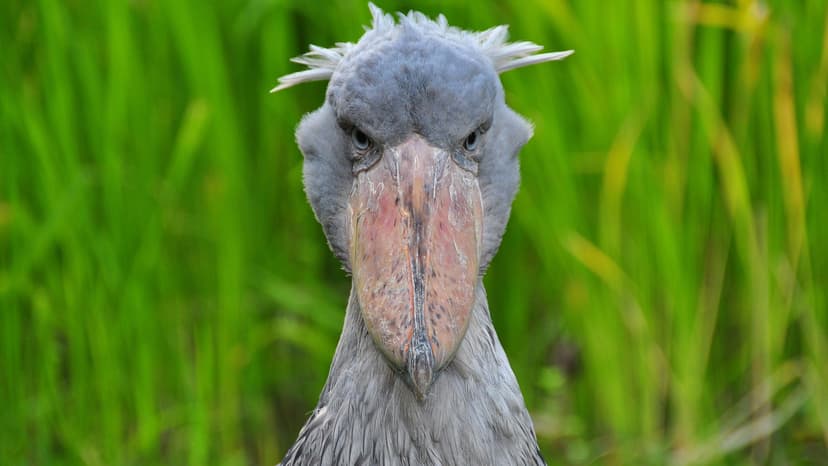
The shoebill, an ancient-looking bird standing nearly five feet tall, captivates with its unique appearance. Its most prominent feature is a massive, clog-shaped beak, capable of gripping substantial prey like catfish and young crocodiles. These majestic birds, cloaked in blue-grey feathers and boasting an eight-foot wingspan, are often found in the dense freshwater swamps and marshes of South Sudan, Uganda, Rwanda, Zambia, and the Democratic Republic of Congo.
These elusive creatures are characterized by their slow movements, employing a 'collapse hunting' strategy where they stand motionless before lunging at prey. Their diet primarily consists of lungfish and tilapia, though they occasionally consume smaller crocodiles. Shoebills typically live solitary lives, but they form pairs to build large nests from reeds and grasses during breeding season, with often only one of their one to three chicks surviving.
Currently listed as Vulnerable by the IUCN, the shoebill population is estimated at fewer than 5,300 mature individuals. Major threats include wetland destruction, the illegal wildlife trade, and climate change. Conservation initiatives, involving local communities and sustainable tourism, are vital for the survival of this magnificent species. The shoebill can live for approximately 35 years in the wild.


