
Home / Environment / Sheep Graze Solar Farms, Boosting Ag & Green Energy
Sheep Graze Solar Farms, Boosting Ag & Green Energy
21 Jun
Summary
- Sheep grazing on solar farms benefits the environment and agriculture.
- Agrivoltaics provide affordable grazing land for new farmers.
- Sheep help manage vegetation, reducing herbicides and fire risk.
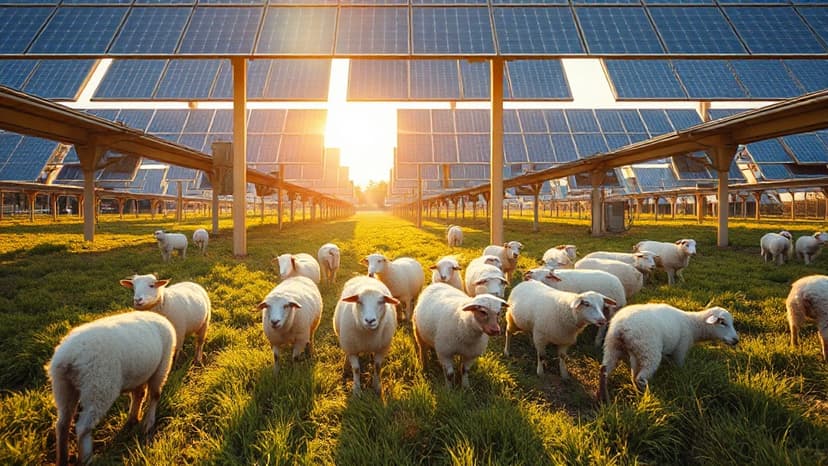
Solar farms are becoming an unlikely ally for agricultural producers, enabling farmers like Mark Schleski to pursue their farming ambitions. Schleski, who grew up in the Twin Cities, is now able to graze his sheep on solar sites, a venture he conceptualized a decade ago. The high cost of land had previously been a significant barrier to entering farming, but these solar sites offer accessible grazing.
The Schleski family utilizes six solar farms across Minnesota for their sheep operation, with sites ranging from Lake Lillian to Montevideo, all within 35 miles of their Renville County home. These sites, often featuring diverse pollinator-friendly vegetation, provide shade for the sheep and assist in managing the ground cover.
Sheep play a crucial role in the maintenance of solar installations. Their grazing helps control vegetation that could otherwise shade the solar panels, reduces the need for herbicides to manage weeds, and provides natural fertilization. This method is also advantageous over mowing, as it avoids creating dry thatch, a potential fire hazard.
While challenges exist, such as adapting to site designs not initially intended for livestock and ensuring adequate water and fencing, the agrivoltaic model proves beneficial. The Schleskis, along with other producers, are paid for grazing their sheep, offsetting feed costs and making the economics viable. This practice also fosters positive community relations, as solar companies maintain well-kept sites that contribute to agricultural production and pollinator habitats.
