Home / Environment / Serengeti Rains Fuel Bigger Wildfires
Serengeti Rains Fuel Bigger Wildfires
17 Dec, 2025
Summary
- Increased rainfall causes vegetation booms in Serengeti savannas.
- More vegetation leads to larger, not more numerous, wildfires.
- Herbivore populations play a role in controlling wildfire fuel.
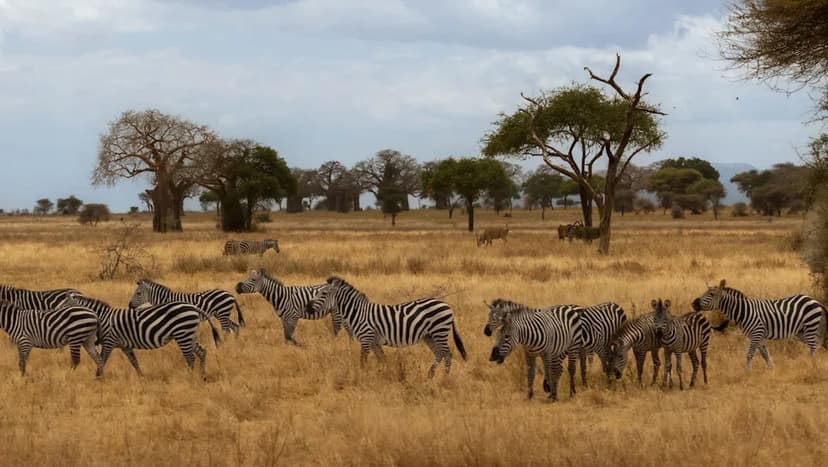
Recent ecological research is uncovering a surprising link between increased rainfall and wildfire dynamics in Africa's Serengeti. Initially, higher precipitation, driven by Indian Ocean weather patterns, stimulates rapid vegetation growth across the vast savannas. This abundance of food attracts migrating herds of wildebeest, zebra, and gazelle, creating greener pastures.
However, this surge in plant life also results in increased wildfire fuel. Consequently, during dry seasons, larger fires ignite, although the frequency of fires remains stable. Researchers are exploring how the increased grazing activity of these herbivores influences the size and intensity of these blazes, seeking to disentangle the complex interplay of factors.
Understanding these intricate ecological interactions is crucial for effective wildfire management and wildlife conservation. The Serengeti, as a largely intact ecosystem, serves as a vital natural laboratory for studying climate change impacts. Maintaining healthy herbivore populations is identified as a key strategy for reducing wildfire risks.