Home / Environment / Sea Turtle Relocation: Is It Harming Hatchlings?
Sea Turtle Relocation: Is It Harming Hatchlings?
28 Aug
Summary
- Relocated sea turtle nests may produce fewer, smaller hatchlings.
- Warmer relocated nests skew sex ratios, favoring females.
- Moving nests impacts moisture, sand, and gas exchange.
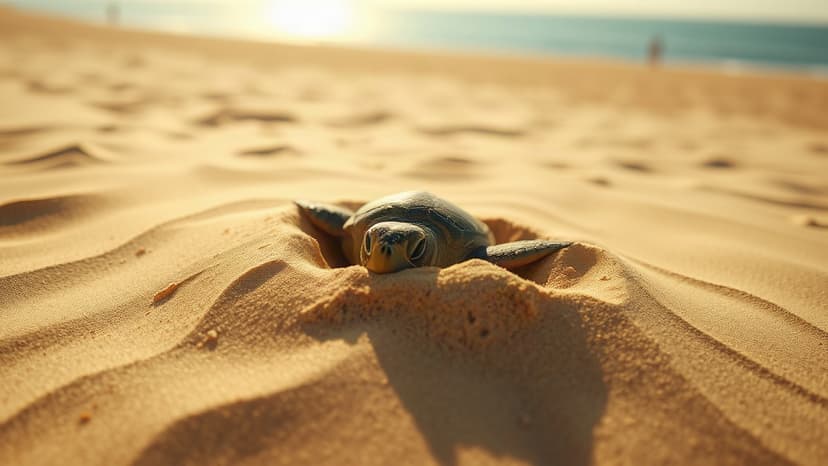
Conservation efforts to protect sea turtle nests from rising temperatures and flooding involve relocating vulnerable eggs. A recent two-year study on Heron Island, Australia, indicates that this intervention may have unseen consequences.
Researchers found that relocated nests, especially unshaded ones, experienced warmer incubation temperatures. This significantly skewed sex ratios, producing predominantly female hatchlings in one observed season.
However, the study also revealed that even shaded relocated nests, which maintained similar temperatures to natural nests, yielded poorer results. Hatchlings from these nests exhibited lower success rates, were smaller, and less capable of righting themselves.
Scientists suggest that factors beyond temperature, such as changes in moisture, sand structure, and gas exchange, could negatively impact embryo development. These subtle environmental shifts can affect hatchling size and performance, crucial for their perilous journey to the sea.
While nest relocation remains a vital tool, the findings urge conservationists to consider more than just immediate threats. Evaluating new sites for shade, moisture, and sand properties is crucial. The research emphasizes that successful conservation requires focusing on the quality and condition of hatchlings, not just their numbers.


