

Home / Environment / Undammed Salween River Faces Alarming Arsenic Contamination
Undammed Salween River Faces Alarming Arsenic Contamination
21 Apr
Summary
- Salween River, Asia's longest undammed waterway, shows toxic arsenic levels.
- Unregulated mines in Myanmar's Shan state are the suspected pollution source.
- Local communities and fishers avoid the contaminated river water.
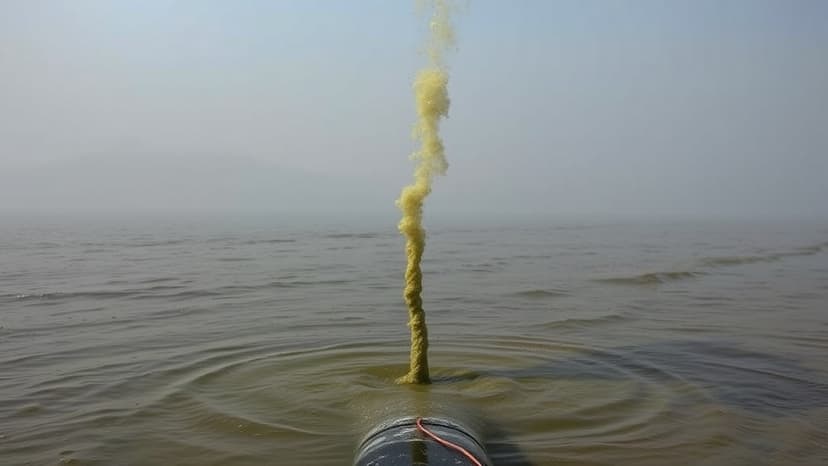
The Salween River, a vital 3,300-kilometer waterway flowing from Tibet through China, Myanmar, and along Thailand's border before reaching the Andaman Sea, is facing a new threat: toxic contamination. Historically a lifeline for civilizations and a biodiversity hotspot, recent independent tests have revealed dangerous levels of arsenic in its waters. These tests, initiated in September 2025 by Thailand's Institute of Health Sciences Research, found arsenic at every monitoring point exceeding double the WHO safety standard of 0.01 mg/L, with some locations reaching five times this limit.
Suspicion for the pollution falls heavily on unregulated mines in Myanmar, particularly in the Shan state. Satellite imagery analysis identified numerous suspected mining sites within the Salween basin, with a notable increase in rare earth extraction operations using in situ leaching. These minerals are crucial for modern technologies like AI and EVs. Secretive gold mining operations, controlled by various armed groups, are also implicated.
As a result, local communities and fishers are on high alert, avoiding contact with the river. A Thai working group has been formed to address the contamination, though details remain vague. The situation mirrors similar arsenic and mercury pollution issues in downstream waters from Shan state mines affecting the Mekong River, highlighting a broader regional crisis of toxic mines threatening Southeast Asia's rivers.
