Home / Environment / Sea Levels Rise: Coastal Homes at Risk
Sea Levels Rise: Coastal Homes at Risk
8 Mar
Summary
- Human activities accelerate global sea level rise.
- Start Bay erosion worsened by extreme weather events.
- Paris Agreement aims to limit global temperature rise.
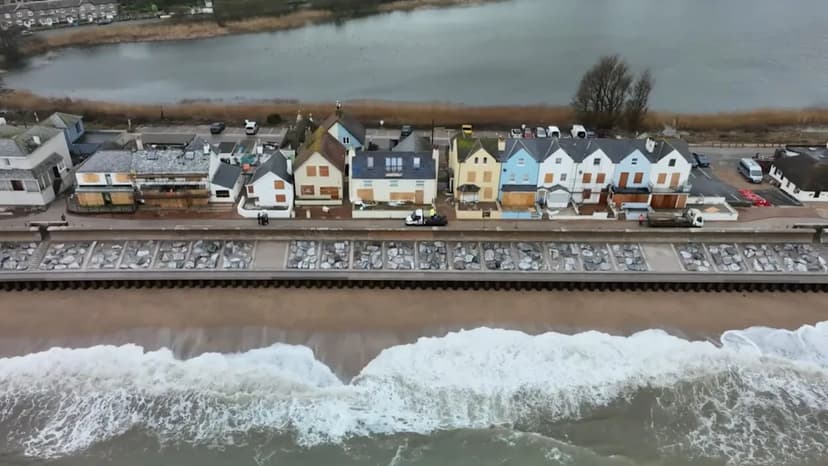
Human activities, including deforestation and fossil fuel combustion, are the primary drivers of rising global temperatures and the resulting increase in sea levels. This phenomenon directly contributes to more frequent extreme weather events, impacting coastal areas worldwide.
Start Bay, a location in South Devon, England, is experiencing exacerbated coastal erosion and flooding due to rising sea levels. Researchers have observed significant changes, with the equivalent of 50,000 bags of gravel lost from the Torcross sea wall since 2007 due to severe weather. Slapton Sands has seen its beach level drop by meters in recent years.
Globally, rising sea levels are attributed to approximately 33% from thermal expansion of warming oceans and 66% from melting ice sheets and glaciers. This expansion is driven by oceans absorbing about 90% of excess heat. The consequences include increased flooding, habitat loss, and damage to critical infrastructure in low-lying and coastal regions.
Efforts to combat this crisis include infrastructure upgrades, such as the Torcross sea wall, and global initiatives like the Paris Agreement adopted in 2015. The treaty aims to limit the impact of rising global temperatures. Individual actions, like reducing plastic use and supporting environmental policies, are also crucial.