Home / Environment / Reefs Get a Voice: Restoring Sound to Save Ecosystems
Reefs Get a Voice: Restoring Sound to Save Ecosystems
22 Jul
Summary
- Restoring underwater soundscapes may help fish return to damaged reefs.
- Artificial reef sounds doubled fish numbers in an Australian Great Barrier Reef study.
- Sound plays a crucial role in guiding young fish to suitable habitats.
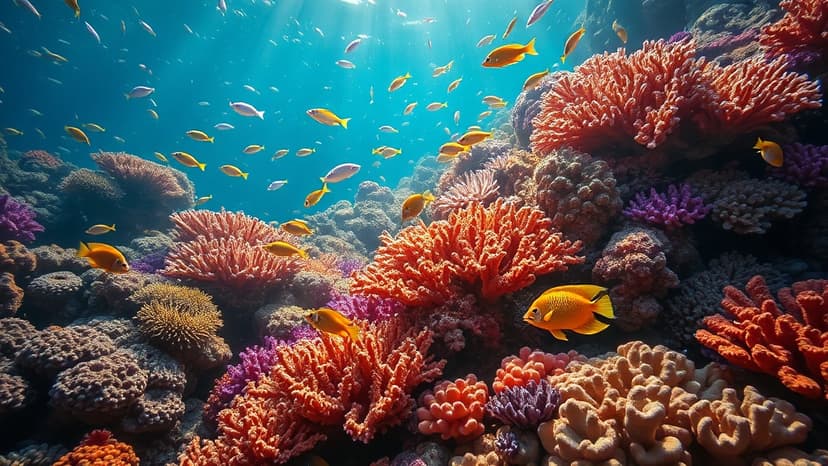
The vital sounds of healthy coral reefs, often overlooked, play a critical role in marine ecosystems. These underwater soundscapes, created by diverse marine life, help young fish identify suitable habitats for settlement. When reefs degrade, this acoustic environment fades, diminishing the signals that attract marine life.
A recent field experiment conducted in Australia's Great Barrier Reef explored the impact of artificial sound on reef restoration. Scientists placed experimental patches of dead coral on sandy seabeds. Some patches were equipped with underwater speakers broadcasting recordings of vibrant reef sounds, while others had inactive speakers or no equipment.
The results were striking: reef patches playing natural reef sounds consistently attracted approximately double the number of young fish compared to silent sites. This acoustic enrichment also led to a greater diversity of fish species, including herbivores, scavengers, and predators. Crucially, the fish that arrived remained in these areas, suggesting that sound encourages long-term habitat suitability.
This innovative approach emphasizes that restoring the underwater soundscape can be as important as restoring the coral itself. By reintroducing natural auditory cues, scientists aim to rebuild fish communities that contribute to the overall health and recovery of damaged reef ecosystems.


