

Home / Environment / Regenerative Farms: Resilient Amidst Global Supply Shocks
Regenerative Farms: Resilient Amidst Global Supply Shocks
29 Mar
Summary
- Regenerative farms use compost, manure, and cover crops for soil fertility.
- These farms show similar yields to conventional ones at lower costs.
- Uptake of regenerative farming is slow, with only 2% fully adopted in Europe.
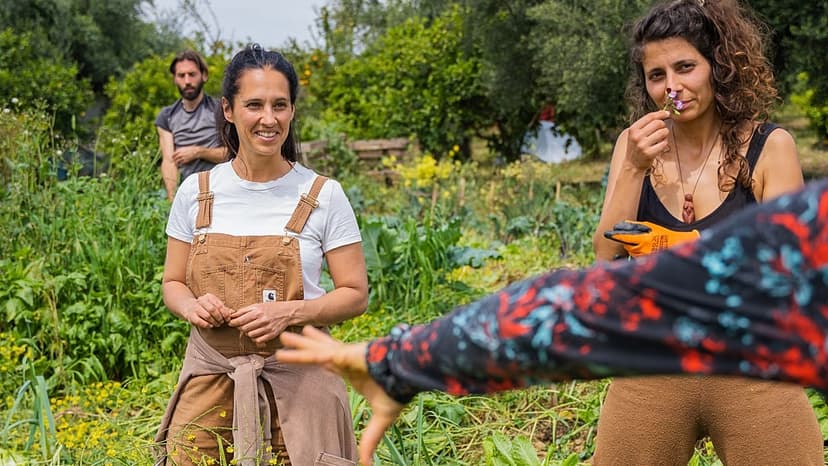
The ongoing conflict in Iran has severely impacted global fertiliser supplies and driven up fuel prices, creating a looming crisis for European farms. However, regenerative agriculture offers a buffer against these disruptions. By improving soil health with compost, manure, and cover crops, these farms reduce their reliance on imported synthetic fertilisers.
Regenerative farming practices not only make farms less vulnerable to supply chain issues but also contribute to environmental benefits such as reduced pollution and increased biodiversity. While modern industrial farming heavily depends on synthetic fertilisers for speed and scale, overuse degrades soil and pollutes ecosystems. Farmers like Sheila Darmos in Greece and Meghan Sapp in Spain are cultivating natural nitrogen sources and organic compost to create self-sufficient systems.
Despite these advantages, the transition to regenerative farming in Europe is slow, with only about 2% of farms fully adopting the methods. Challenges include the labour-intensive nature of the switch and the need for immediate financial gains. Farmers and advocates call for policy changes, incentives, and investments to support these sustainable practices, arguing that current subsidies often favour less environmentally friendly methods.
Studies indicate that regenerative farms achieve yields only slightly lower than conventional farms, with significantly reduced costs for synthetic nitrogen fertiliser and pesticides. This approach enhances not only ecological resilience but also economic stability, offering farmers greater independence from large agri-chemical industries and protection against price volatility. As global uncertainties persist, scaling up regenerative agriculture is seen as a crucial step towards building a more resilient food system from the ground up.
