Home / Environment / Bacteria Boost for Salty Cypress Trees
Bacteria Boost for Salty Cypress Trees
17 Jul
Summary
- Researchers use recycled glass sand to rebuild Louisiana's coast.
- Salt-tolerant bacteria help cypress trees withstand saltwater intrusion.
- Symbiotic fungi and bacteria enhance plant growth in glass sand.
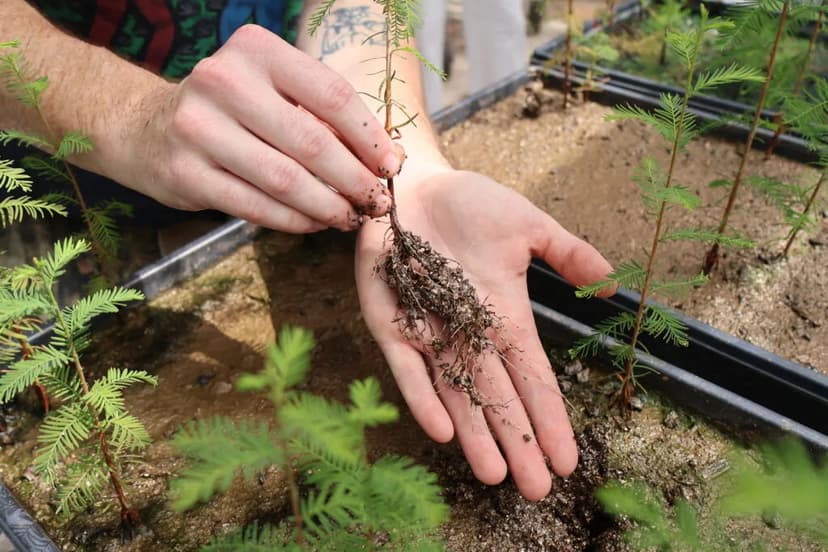
Researchers are developing innovative methods to restore Louisiana's eroding coast using recycled glass sand.
This new material, created from recycled bottles by Tulane University and Glass Half Full, is mixed with nutrient-rich Mississippi River sediment. This combination fosters a crucial microbiome of bacteria and fungi, essential for establishing wetland plants like the iconic bald cypress.
Experiments have demonstrated that cypress trees can grow successfully in a 50/50 mix of glass sand and natural sediment, proving its viability for coastal restoration projects. This approach is vital for rebuilding land that is threatened by rising sea levels and subsidence.
To combat saltwater intrusion, a major challenge for coastal restoration, scientists are introducing salt-tolerant bacteria to the glass sand mixes. These microbes help cypress trees endure higher salinity levels, preventing root damage and land erosion that occurs when freshwater plants die in salty conditions.
The team has already identified and sequenced between 40 to 80 strands of potential salt-tolerant bacteria. They are also observing beneficial fungi that naturally establish in the glass sand, further supporting the symbiotic relationships needed for plant survival and successful land rebuilding.


