Home / Environment / Rare Green Hoverfly Booms in New Forest
Rare Green Hoverfly Booms in New Forest
22 Feb
Summary
- Green forest hoverfly sightings have tripled, exceeding previous records.
- Over 450 sightings logged in the New Forest, a key habitat.
- Volunteer efforts significantly boosted understanding of the rare insect.
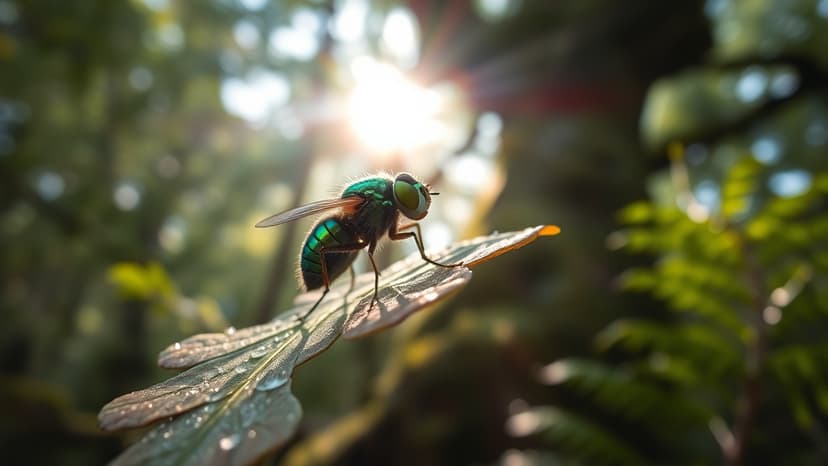
The green forest hoverfly, a rare insect known for its striking metallic green and golden body, has seen a dramatic increase in sightings across the UK.
Recent data indicates a threefold rise, exceeding all prior records. A dedicated four-year study, supported by Forestry England, documented over 450 sightings within the New Forest, a national park in Hampshire. This area, along with Windsor Great Park in Berkshire, represents the only known habitats for this species.
Historically, before 2022, only 150 sightings of the hoverfly, scientifically named Caliprobola speciosa, were recorded. However, extensive data collection by volunteers, totaling over 2,700 hours since then, has revealed a significant surge. In 2025 alone, more than 200 sightings were logged, underscoring the species' recovery and spread.
Conservation efforts have benefited greatly from this volunteer-led research. The findings have improved understanding of the hoverfly's distribution within the New Forest, suggesting it is more widespread than previously believed. This has enabled Forestry England to implement targeted habitat management, such as clearing surrounding holly from ancient beech tree stumps, crucial for the hoverfly's survival.
Leanne Sargeant, a senior ecologist at Forestry England, described the New Forest as a vital sanctuary for nature. She emphasized the woodland's ancient and biodiverse character, making it an ideal environment for species like the green forest hoverfly. The positive trend for this rare insect further solidifies the New Forest's status as a critical haven for biodiversity.